
The Unyielding Wall: How the Rook Operates
In the late 15th century, amidst the dense, vibrant rainforests of what is now southern Nigeria, the air within the Kingdom of Benin hummed with the sound of a civilization defining its own edges. Under the command of Oba Ewuare the Great, thousands of laborers were engaged in a task that defied the ephemeral nature of the jungle: the construction of the Benin Walls. This was not merely a defensive trench; it was a gargantuan earthwork, a linear network of moats and ramparts that would eventually span over 16,000 kilometers. It was a mathematical statement of sovereignty carved into the soil. While neighboring states relied on the kinetic speed of raids or the diagonal subversions of court intrigue, Ewuare built a Rook. He understood that a kingdom is not defined by how far it can strike, but by the integrity of the lines it refuses to let move.
The Walls of Benin did not slide; they endured. They provided the "straight-line" logic of a fortress that protected the inner sanctum of the Oba while allowing the city to function as a complex, orderly machine. In the taxonomy of power, the Rook is the archetype of the Unyielding Wall. It represents the unglamorous, subterranean labor of holding the line when the world demands a pivot. Ewuare realized, centuries before the modern bureaucrat entered the office, that without a stable architecture of preservation, even the most brilliant "leaps" of a Knight or "sweeps" of a Queen are eventually swallowed by the chaos of the forest. He built the structure that ensured the kingdom would be standing when the seasons changed.
One might observe that the modern world is currently suffering from a "pathology of the fluid." We have entered an era where institutions are celebrated for their "agility" and individuals are pressured to remain in a state of perpetual "pivot." We prize the kinetic reach of the globalist and the eccentric disruption of the tech-insurgent, yet we have become structurally illiterate in the art of the bastion. We are witnessing a crisis of endurance because we have forgotten the specific, silent, and essential logic of the Rook. We have mistaken the walls of a home for the walls of a prison, and in our rush to dismantle every boundary, we have left ourselves vulnerable to the very storms we sought to escape.
To operate as a Rook is not to be stagnant, but to be "Immutable." It is to move from the "erratic" to the "reliable," not as a failure of imagination, but as a supreme act of strategic presence. If the King is the axis and the Queen is the engine, the Rook is the foundation that ensures the engine doesn't vibrate the axis into dust. The Rook is the embodiment of Structural Sovereignty: the realization that someone must be the anchor if the kingdom is to survive the march of time.
I. The Operating Logic of the Rook: The Sovereignty of the Straight Line
In the taxonomy of power, the Rook is the board’s most honest entity. It moves only in ranks and files: straight, long, and uncompromising. It lacks the subtle, diagonal vision of the Bishop and the leaping unorthodoxy of the Knight. This is not a limitation; it is its power. The Rook’s power is derived from its "Structural Integrity": the ability to command the long view of a corridor and protect the flank of the King without the need for constant recalibration.
"The Rook’s power is derived from its Structural Integrity: the ability to command the long view and protect the flank without the need for constant recalibration." Germar Reed
At Work: The Process Guardian
In the professional landscape, the Rook archetype is the manager, the operations officer, or the legacy-builder who refuses to be seduced by the "Blizzard of the New." While the Queen chases the market and the Knight disrupts the workflow, the Rook identifies the "Structural Minimum." He is the one who understands that a company is not its vision statement, but its supply lines and its standards. He guards the ranks.
The Rook operates through "Reliability as Power." His success is measured by his "Endurance": the degree to which he can maintain a standard of excellence when the novelty has worn off. To lead as a Rook is to realize that your primary function is to be the "Guardrail" of the organization. You are the one who ensures that the "leaps" of the visionaries don't lead the company off a cliff. You move in straight lines because the straightest line is the shortest path between a promise and its fulfillment.
In the Family: The Generational Anchor
To lead a family as a Rook is to provide a "sovereignty of consistency." In the domestic sphere, the Rook is the one who builds the traditions, maintains the rituals, and holds the boundaries that allow children to feel secure. While the King provides the axis and the Bishop senses the emotional diagonals, the Rook is the one who ensures the bills are paid, the house is maintained, and the "rules of the home" are predictable.
This requires a "Burden of the Bastion." The Rook’s work is often invisible because it is the work of prevention. When the family is safe, the Rook is forgotten; when the family is in chaos, the Rook is blamed for not building the walls higher. Success for the Rook in the family is found in "Institutional Preservation": the ability to create a structure so sound that the next generation has a "Square to Stand On" before they ever have to take a leap. He is the reminder that love is not just a feeling, but a commitment to the straight lines of duty.
In Negotiations: The Bottom Line
In the theater of negotiation, the Rook does not rely on the "Frame-Shift" of the Bishop. He relies on "Inexorability." He enters the room and establishes the "Straight-Line Demand." He does not haggle over the diagonals of perception; he commands the ranks of the structural requirement. He represents the "Final Word" that cannot be bypassed or leaped over.
The Rook wins by being the only piece that is still standing when the "kinetic" players have exhausted themselves. He understands that most negotiators will attempt to use "L-shaped" logic to find a loophole, but a loophole only exists if the wall has a crack. Success for the Rook is not found in the "cleverness" of the deal, but in the "Integrity" of the outcome. He doesn't want to win the argument: he wants to win the position that makes the argument unnecessary.
II. The Rook’s Ecosystem: Strengthening the Board
A Rook that stands in isolation is merely a monument. To be successful, the fortress must be integrated into the broader movement of the kingdom.
The Rook and The King: The Guard and the Axis
The Rook is the King’s "Castled Defense." The King provide the axis, but the Rook provides the "Sovereign Space." A successful Rook does not compete with the King’s authority: he creates the environment where that authority can exist without being constantly besieged. He is the "Wall" that allows the King to remain in "Active Stillness." Without the Rook, the King is a target; with the Rook, the King is a sovereign.
The Rook and The Queen: The Backstop and the Engine
The Rook provides the "Structural Safety" that allows the Queen to move with maximum kinetic force. The Queen can strike at the edge of the board because she knows the Rook is guarding the center. A successful Rook does not try to follow the Queen’s multi-directional paths: he builds the "Fortified Base" to which she can retreat when the storm becomes too heavy. This is the marriage of "Reach" and "Security."
The Rook and The Knight: The Foundation and the Leap
The Rook and the Knight are the "Physics" of the board. The Knight breaks the patterns, but the Rook provides the "New Pattern" once the leap is complete. A successful Rook understands that the Knight’s disruption is necessary to prevent the walls from becoming a prison, but he also knows that without his walls, the Knight’s leap has no landing. He provides the "Solid Square" that the Knight requires to be effective.
The Rook and The Bishop: The Structure and the Conscience
The Rook provides the "Physical Frame" for the Bishop’s "Spiritual Vision." The Bishop sees the diagonals, but the Rook builds the ranks. A successful Rook listens to the Bishop’s warning about the "cracks in the foundation" and acts with straight-line precision to fix them. He is the "Hand" that builds what the Bishop’s "Eye" perceives.
III. The Measured Provocation: The Ethics of the Wall
One must present a counter-intuitive truth: The Rook’s greatest utility is also his "Primary Pathology." This is the phenomenon of Dogmatic Calcification.
In our modern era, we are taught that "walls are bad." But a cell without a wall is not "free": it is dead. A wall is the condition for life to exist in a concentrated form. However, the Rook must eventually confront the "Ethics of the Bastion." If the wall is built too high, or if it is never allowed to shift, the fortress becomes a tomb. The Rook must learn to distinguish between the "Wall of Protection" and the "Wall of Denial."
"Stability is not a lack of movement, but a form of strategic presence. A wall is not a prison until the King forgets how to open the gate." Germar Reed
The successful Rook must learn the art of "Flexible Integrity." He must know that his straight lines are a tool, not a cage. If he clings to a structure that no longer serves the soul of the game, he becomes a "Brittle Rook," an institutionalist who protects the "manual" while the "mission" is being slaughtered. He must learn that his most powerful move is not just holding the line, but knowing which line is worth holding.
IV. The Shadow of the Rook: The Bureaucrat and the Ruin
Every archetype contains its own failure state. For the Rook, the shadow manifests in two directions:
The Bureaucrat: This is the Rook who has lost his purpose. He enforces the "straight line" not to protect the King, but to avoid the complexity of the diagonal. He uses "Process" as a weapon against "Potential." He creates a system of such rigid ranks and files that the Knight can no longer leap and the Queen can no longer breathe. He is the manager who values "Policy" over "People."
The Ruin: This is the Rook who has lost his integrity. He stands in the center of the board, appearing solid, but his foundation has been hollowed out by neglect. He is the "Institution" that exists only as a brand, a hollow wall that will collapse the moment it is struck by a "Knight’s Leap" or a "Queen’s Storm." He confuses "Longevity" with "Vitality."
Success for the Rook is found in "Living Architecture": the ability to maintain a rigorous structure that is still permeable to the spirit of the game.
V. Synthesis: The Silent Guard
To be the Rook is to realize that you are the primary engine of preservation. You are the piece that ensures the board is still standing when the final move is made. It is the unglamorous labor of being the "Reliable One" so that the "Whole Kingdom" can thrive.
During "Good Times," the Rook’s job is to build the "Reserves." He uses the stability of the era to strengthen the walls and deepen the moats, preparing for the storm that he knows will eventually come. He is the "Steward of the Harvest."
During "Bad Times," the Rook’s job is to be the "Unyielding Wall." He provides the "Last Line of Defense" that allows the King to regroup and the Queen to counter-strike. He is the one who refuses to move, even when the enemy is at the gate. He is the reason the center holds.
One might observe that we do not need more "pivots" today. We have plenty of those managing the decline. What we need are Rooks. We need people who are willing to take up the "Straight Line" of their own integrity, build the "Benin Walls" of their own character, and stand as a guardian for the things that are too valuable to be lost.
The storm is coming. The board is waiting for the wall.
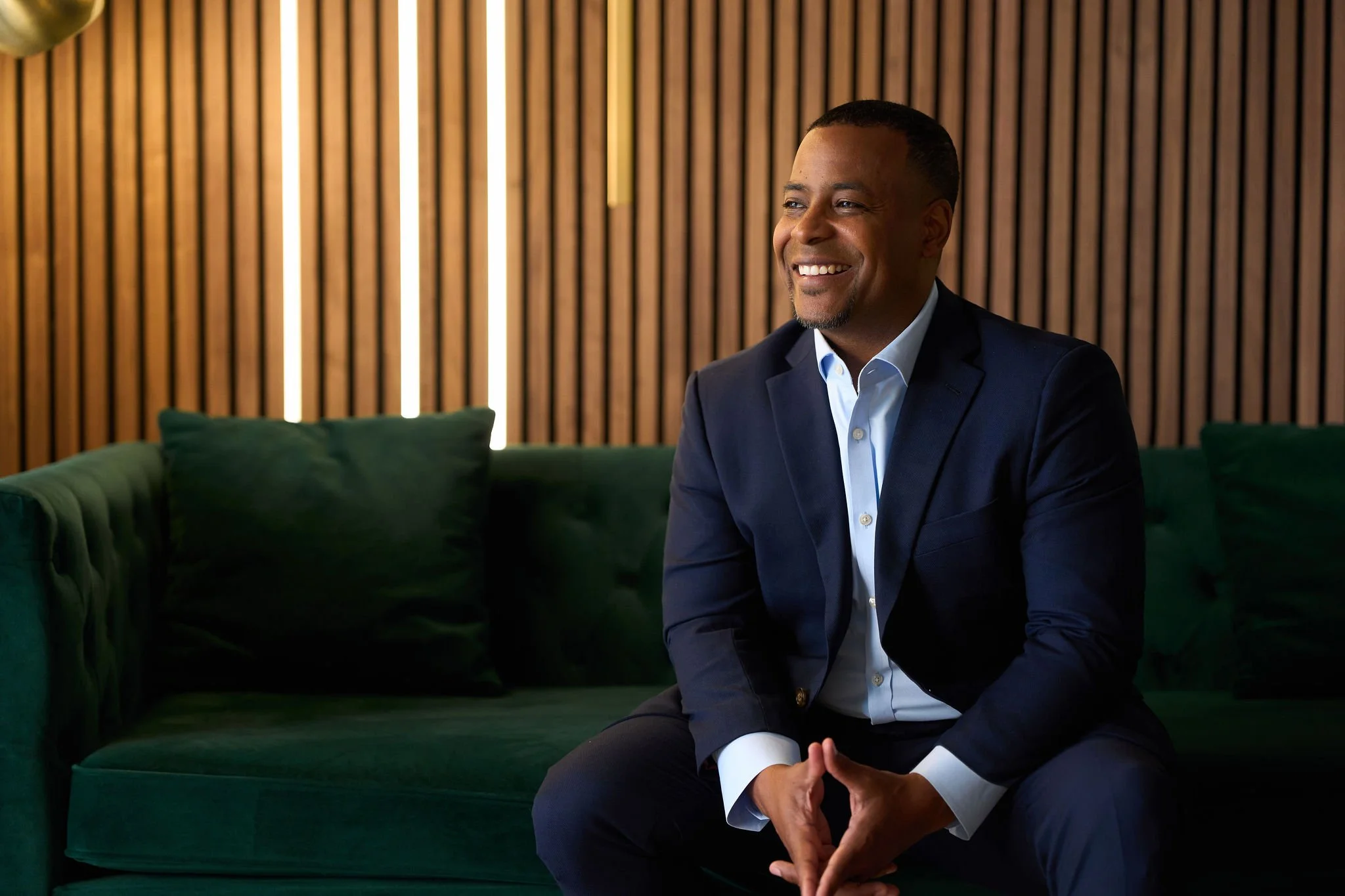
About the Author
Germar is a strategist, storyteller, and student of archetypes. He writes at the intersection of leadership, emotional intelligence, and symbolic power, seeking not to impress, but to illuminate.
His work draws from myth, philosophy, and the quiet disciplines of presence. He believes that true influence begins not with charisma, but with character. You can follow his work at GermarReed.com