
The Stillness of Power: What It Means to Be the King

In an era defined by performative velocity and the cacophony of the digital square, we have lost our tether to the ancient, stabilizing necessity of the "King", the leader whose power is found not in movement, but in the refusal to be moved.
In the winter of 174 A.D., on the frigid banks of the Danube, Marcus Aurelius sat in a tent that smelled of wet leather and old parchment. Outside, the Germanic tribes were a chaotic, shifting tide; inside, the Emperor of Rome was writing to himself. He was not drafting battle plans or dictating decrees of conquest. He was reminding himself to remain like the "rock against which the waves continually break."
"...rock against which the waves continually break."
Aurelius was the axis mundi, the center of the world. The Roman legions marched in his name, the complex gears of the imperial bureaucracy ground forward on his authority, and yet his primary function was an exercise in profound, almost agonizing, stillness. He understood what the modern world has largely forgotten: that in any system, from a transcontinental empire to a modern boardroom, there is a requirement for a fixed point. If the center moves too quickly, the periphery flies apart.
We are currently living through a crisis of the center. In our culture, visibility is frequently mistaken for vitality, and "leadership" has become synonymous with "disruption." We reward the kinetic, the founder who pivots weekly, the politician who reacts to every tremor on social media, while viewing stillness as a form of obsolescence. But to look at the archetype of the King is to realize that true authority is not a function of noise, but of gravity.
The Geometry of the Board
The metaphor of chess is often invoked in discussions of power, yet we frequently misread the King’s role. The Queen is the instrument of tactical brilliance; the Knights are the agents of unpredictability. They represent the "spectacle" of the game. The King, however, moves with a deliberate, almost tectonic slowness.
To the untrained eye, the King appears weak. He is restricted. He is vulnerable. Yet the logic of the entire system is predicated on his survival. His power is not found in what he does, but in what he represents. He is the "meaning" of the board. Without his presence, the mechanical movements of the other pieces lose their objective.
This is the essence of the King archetype: the capacity to absorb complexity and remain unfragmented. In the 16th century, Emperor Akbar of the Mughal Empire was known to walk the ramparts of Fatehpur Sikri alone at night. His courtiers feared he was succumbing to the weight of his crown, but Akbar was engaged in what modern sociologists might call "environmental scanning." He was listening to the silence of his kingdom. He understood that the pulse of an empire is not found in the shouting of the court, but in the subtle shifts of the foundation. Stillness, for the King, is not a lack of action; it is a heightened state of attention.
The Solitude of the Essential
There is a particular loneliness inherent in being the final line of defense. To be the "axis" means that one cannot afford the luxury of panic. When a crisis strikes, whether it is a market collapse or a structural failure, the King becomes the emotional and structural containment for the group.
This requires a form of "stately restraint." While others are permitted to react, to vent, and to despair, the King must remain a vessel for the collective anxiety. He must move slowly, not out of lethargy, but because he is calculating the momentum of the entire board. He sees the cracks in the wall before the stones begin to fall.
Consider George Washington’s refusal of a literal crown. By twice stepping away from total power, Washington exercised the ultimate Kingly trait: the understanding that leadership is a stewardship of stability rather than a pursuit of personal permanence. He provided the "gravity" that allowed a fledgling republic to find its own orbit, proving that the King’s greatest strength is often his refusal to occupy the space that his ego demands.
The Brittle Throne
Every archetype carries its own shadow, and for the King, that shadow is "stagnation." When the stillness of the wise leader curdles into the paralysis of the fearful one, the King becomes brittle.
History is littered with the wreckage of leaders who confused poise with avoidance. King Saul of Israel is the perennial cautionary tale; his early promise was swallowed by a defensive crouch. Fearing a loss of control, he replaced genuine leadership with a series of frantic, performative rituals. He stopped leading long before he lost his life, becoming a hollow monument to his own insecurity.
The modern "Brittle King" is the executive who refuses to delegate because they fear their own irrelevance, or the patriarch who mistakes emotional silence for strength. This is not the stillness of Marcus Aurelius; it is the rigor mortis of a dying ego. When a leader believes their own myth of invincibility, they stop being the anchor and start being the weight that sinks the ship.
The Hidden Sovereignty
We do not often write songs for those who hold the center. Our narratives are dominated by the "Hero", the one who storms the hill, rather than the King, who ensures the hill is worth taking.
Yet, if you look closely, you will see these "hidden kings" everywhere. They are the managers who quietly shield their teams from corporate volatility. They are the parents who maintain the emotional infrastructure of a home through years of unglamorous consistency. They are the individuals who, when the room descends into chaos, become the one point of stillness that everyone else anchors to.
They are not identified by their charisma, but by their endurance. They are the ones who stay.
In a world that demands we be "fast," "lean," and "agile," there is a radical dignity in simply standing still. If you find yourself carrying a weight that no one else seems to notice, or if you feel the silent pressure of being the person who cannot fall, you are participating in an ancient and essential lineage. You may not have a throne, and you may never hear the applause of the crowd, but the board knows where you are.
Stand. The center must hold.
Next in the Archetype Series: The Queen, Motion, Magnetism, and the Power of Precision. If the King is the center, the Queen is the current. She moves with speed and strategy, wielding power not through stillness, but through presence in motion.
The Sovereignty of the Board: A Complete Inquiry
An exploration of the six governing forces of human ambition, presence, and legacy.
The King | The Stillness of PowerOn the heavy, silent axis of leadership and the burden of the center.
The Queen | Motion in All DirectionsOn the kinetic imperative and the expansive reach of the matriarch.
The Bishop | Vision in AnglesOn the oblique perspective and the unseen costs of every move.
The Knight | The Architecture of the LeapOn disruption, unorthodox strategy, and bypassing the status quo.
The Rook | The Sovereignty of the Straight LineOn structural integrity, the guard, and the walls that endure.
The Pawn | The Long MarchOn the radical potential of persistence and the geometry of transformation.
Return to Crown & Shadow HomeJoin the conversation on Facebook to discuss the shifting geometry of our modern board.
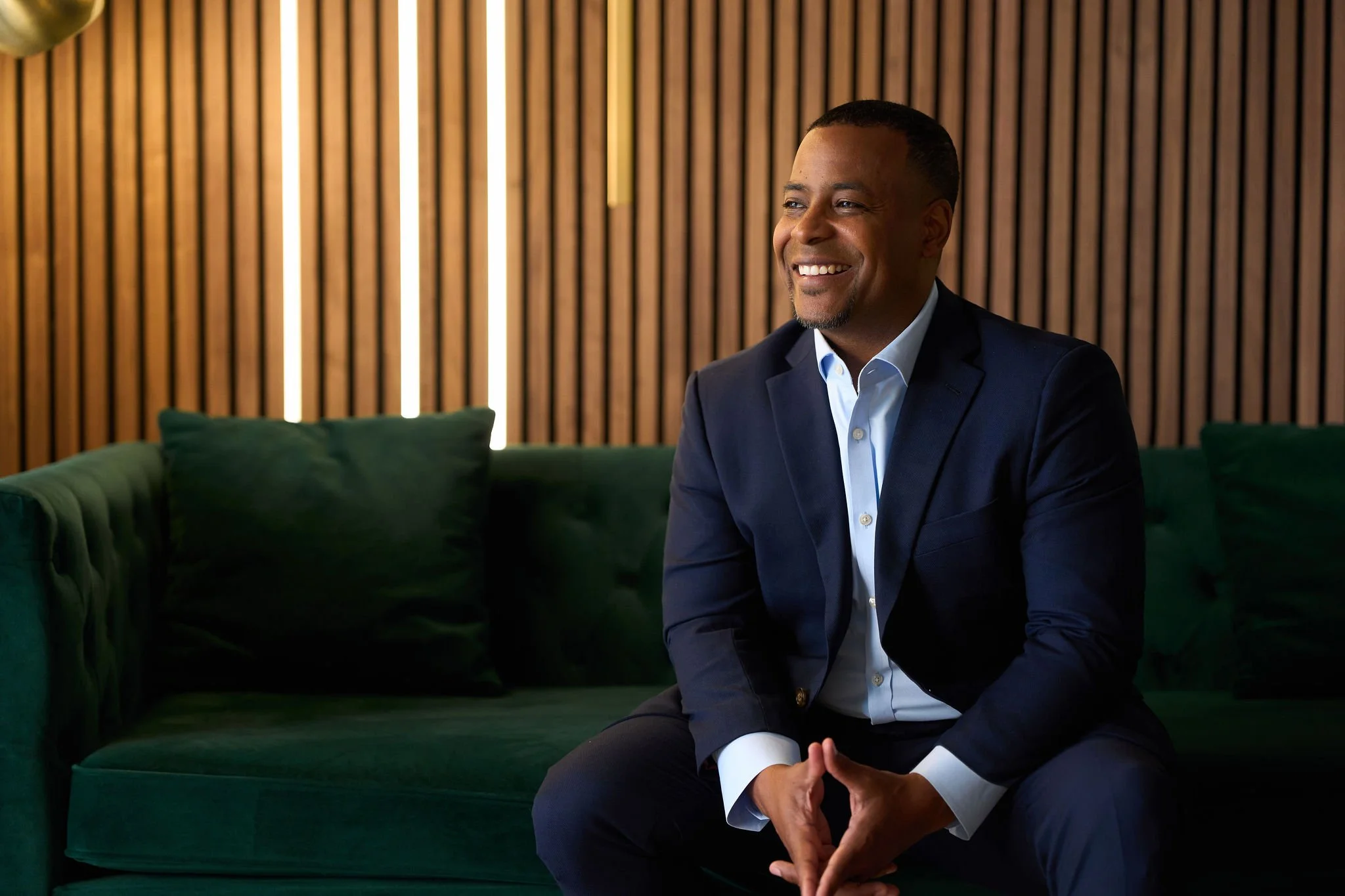
About the Author
Germar is a strategist, storyteller, and student of archetypes. He writes at the intersection of leadership, emotional intelligence, and symbolic power, seeking not to impress, but to illuminate.
His work draws from myth, philosophy, and the quiet disciplines of presence. He believes that true influence begins not with charisma, but with character. You can follow his work at GermarReed.com