
The Bishop — Vision in Angles
In a political and corporate culture addicted to the direct assault, we have forgotten the power of the "Bishop", the archetype of oblique vision and the subtle art of frame-shifting.

In the summer of 1535, as the sun set over the Tower of London, Sir Thomas More prepared for his final transition from counselor to martyr. More had spent years at the right hand of Henry VIII, not as a general or a financier, but as a "Bishop", in the archetypal sense, a figure of conscience and oblique perspective. He did not challenge the King with the blunt force of a rebellion: he challenged him with the "diagonal" pressure of an alternative moral reality. More understood what the modern strategist often overlooks: that the most profound changes to the board are rarely the result of a direct strike, but of a subtle shift in the angle of perception.
In the taxonomy of power, the Bishop is the board’s great subtleist. He lacks the sweeping, multi-directional reach of the Queen and the symbolic, central weight of the King. He is tethered to his color, restricted to his diagonals, and often invisible to the untrained eye. Yet, if you underestimate the Bishop, the entire structure of your defense will collapse. He represents the principle of vision, the capacity to see the unseen patterns and connections that run beneath the surface of the immediate.
The Geometry of the Oblique
What defines the Bishop is not movement, but perspective. While the Rook guards the straight corridors of force and the Knight leaps over the obvious, the Bishop finds the openings between them. He looks where no one else looks. He sees across, not forward.
This "diagonal" vision is the hallmark of the true strategist. In history, this archetype takes the form of the advisor whose influence is felt long before it is seen. We see it in Niccolò Machiavelli, who, in The Prince, did not merely offer a set of rules for ruling, but provided a new "angle" on the nature of power itself, one that was sharp, dark, and fundamentally reshaped the Western political imagination. The Bishop archetype is not always righteous, but it is always perceptive. It asks not "What is happening?" but "What does this mean?"
The Cassandra Paradox
To see what others cannot, or will not, is to carry a lonely weight. This is the "Burden of Insight." The Bishop notices the cracks in the institutional foundation long before the ceiling begins to sag, and in that awareness, he is often isolated.
"The Bishop notices the cracks in the institutional foundation long before the ceiling begins to sag, and in that awareness, he is often isolated."
History is a graveyard of Bishops who spoke too early and were dismissed as alarmists, or who waited too long and were blamed for their silence. This is the paradox of foresight: to be cursed with knowledge but not always empowered to act. In modern organizations, the Bishop is the analyst who warns of a market shift that contradicts the CEO’s optimism, or the quiet observer in a family who senses a building tension before it explodes into conflict. Their gift is the "long view," but their daily reality is the requirement of infinite patience.
The Shadow of the Spymaster
Every archetype contains its own failure state, and for the Bishop, that shadow is "disconnection." When vision is untempered by the practical demands of the straight lines, it curdles into abstraction or, worse, manipulation.
Too much time spent in the diagonals can lead to a loss of touch with the "straight" reality of the rank and file. The Bishop can become the manipulative schemer, trading truth for intrigue and vision for secrecy. For every Seneca, who attempted to temper the madness of Nero with philosophical counsel, there is a Rasputin, whose "oblique" influence grew twisted by his own desires. The Bishop’s downfall is rarely a failure of sight: it is a failure of balance. He may see so much, and so obliquely, that he eventually loses the trust of those who must walk the simpler paths.
The Power of Frame-Shifting
Despite these risks, the Bishop is the indispensable engine of alignment. He does not lead by command, but by illumination. His strength is not in being the loudest voice in the room, but in being the voice that shifts the entire frame of the conversation.
The Bishop is not interested in the ephemeral applause of the crowd: he is interested in the structural integrity of the game. By identifying the pressure lines that cross the board, he allows the King to remain steady and the Queen to move effectively. He provides the "context" that makes the "content" of power possible.
"Stability is not the absence of change, but the mastery of it through the preservation of the core."
The Hidden Counselors
Not every Bishop sits at the ear of a king. You will find them in every corner of life: the friend who notices a pattern in your behavior that you have spent years ignoring; the colleague whose quiet observation changes the trajectory of a project; the thinker whose "diagonal" take on a current event makes the obvious headlines feel suddenly shallow.
They are rarely the ones advancing the front lines, but they are the ones whose vision allows everyone else to move with confidence. They are the reminders that what we see is rarely all there is. The Bishop may not decide the game with a singular, dramatic stroke, but without him, the game can never be truly understood.
Next in the Archetype Series: The Knight, Disruption with Precision. Where the Bishop sees the unseen, the Knight bends the rules. He leaps over order, cuts through expectation, and reminds us that some power comes not from following the board, but from breaking it.
The Sovereignty of the Board: A Complete Inquiry
An exploration of the six governing forces of human ambition, presence, and legacy.
The King | The Stillness of Power On the heavy, silent axis of leadership and the burden of the center.
The Queen | Motion in All Directions On the kinetic imperative and the expansive reach of the matriarch.
The Bishop | Vision in Angles On the oblique perspective and the unseen costs of every move.
The Knight | The Architecture of the Leap On disruption, unorthodox strategy, and bypassing the status quo.
The Rook | The Sovereignty of the Straight Line On structural integrity, the guard, and the walls that endure.
The Pawn | The Long March On the radical potential of persistence and the geometry of transformation.
Return to Crown & Shadow HomeJoin the conversation on Facebook to discuss the shifting geometry of our modern board.
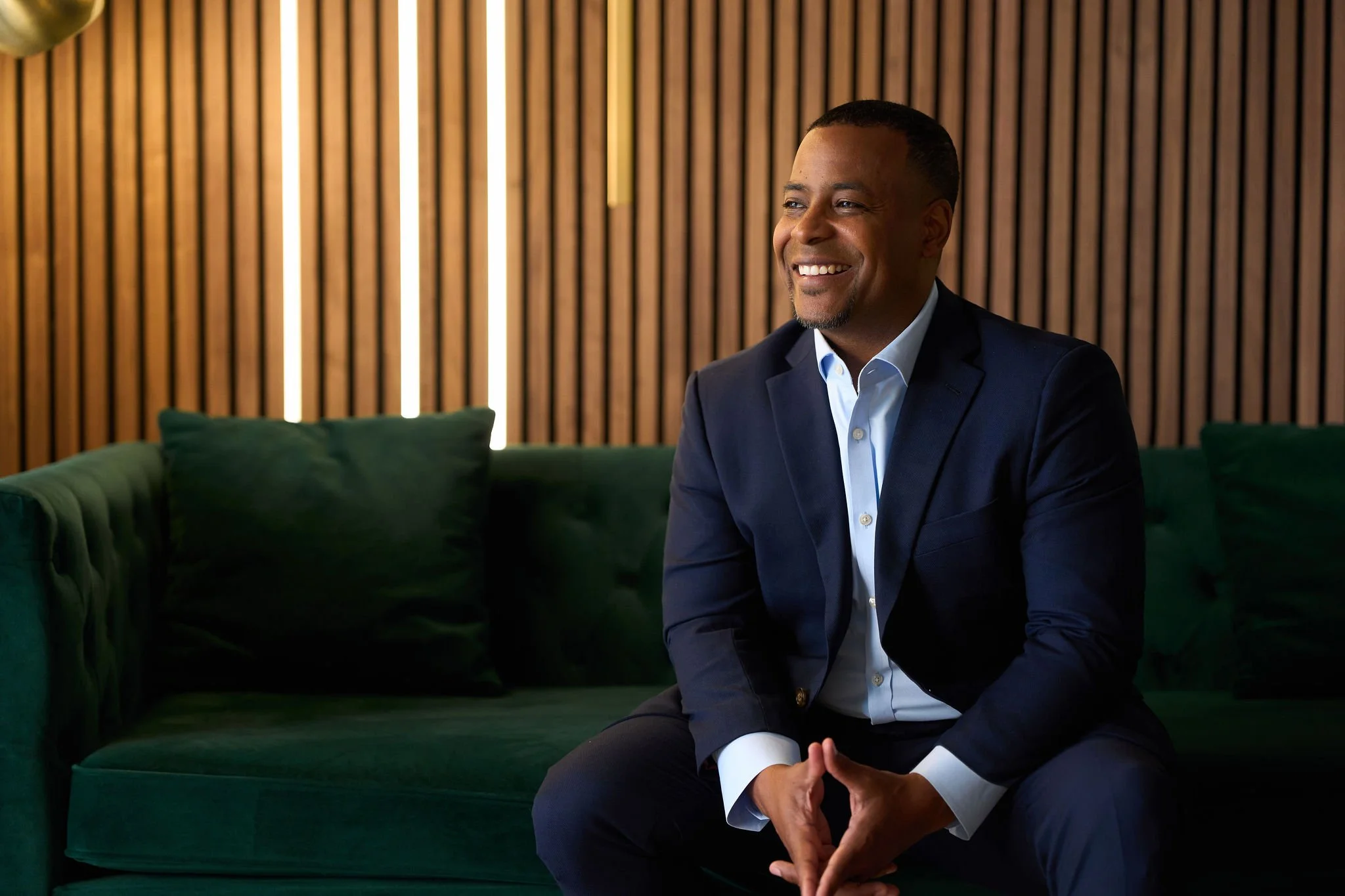
About the Author
Germar is a strategist, storyteller, and student of archetypes. He writes at the intersection of leadership, emotional intelligence, and symbolic power, seeking not to impress, but to illuminate.
His work draws from myth, philosophy, and the quiet disciplines of presence. He believes that true influence begins not with charisma, but with character. You can follow his work at GermarReed.com