
The Board Assembled
In the delicate ecology of the household, survival depends less on the sentimentality of love and more on a sophisticated, ancient choreography of roles.
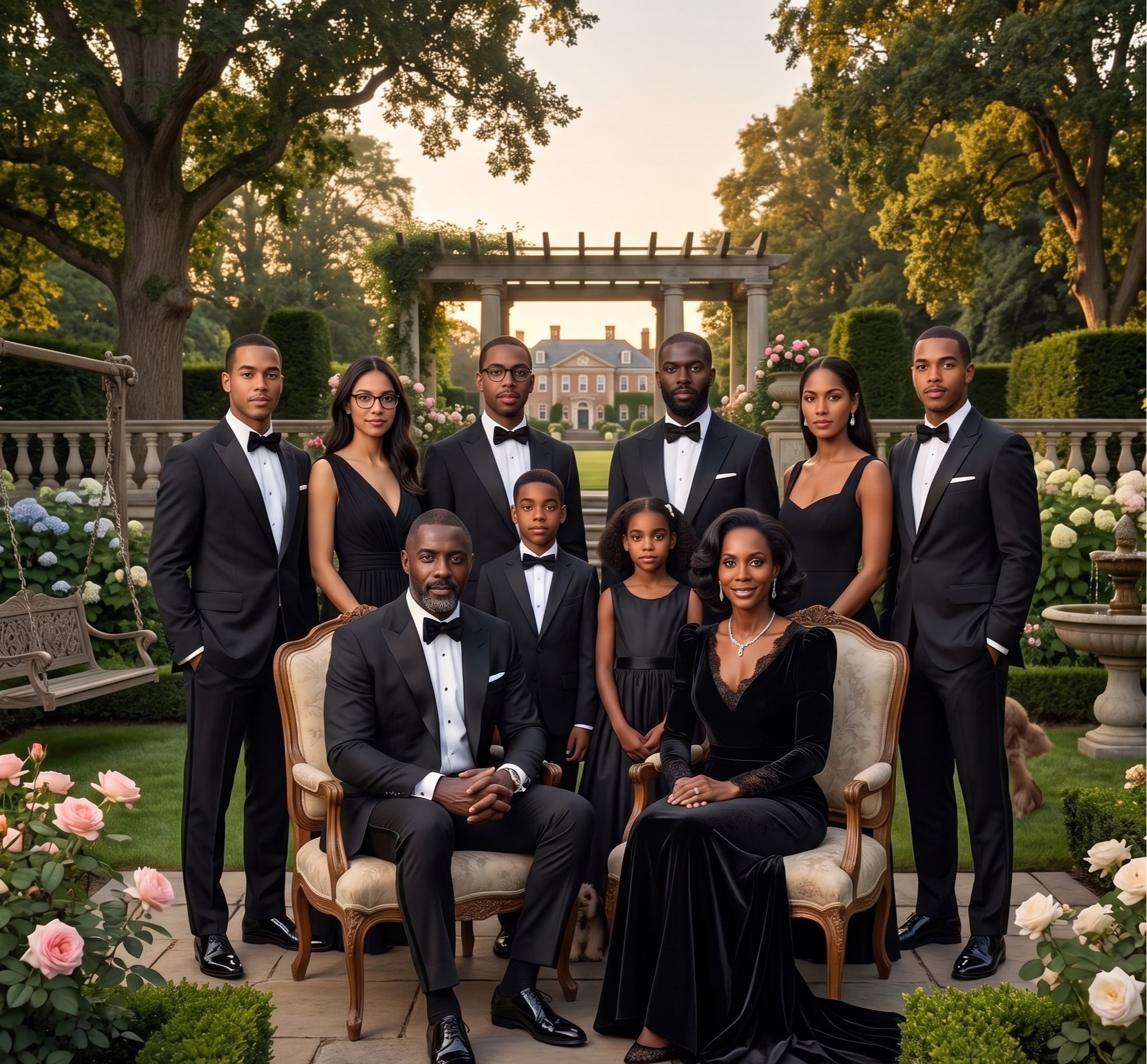
It is a common sentimentalism to suggest that families are held together by love alone. But a closer inspection of history, and of the dinner table, suggests a more complex architecture. Families, much like kingdoms, do not rise or fall on the strength of affection; they endure through balance. They succeed or fail based on the interplay of roles, the tension between preservation and change, and the ability of each member to carry a structural burden without collapsing into the shadow of their own temperament.
If we view the family through the lens of the chessboard, we move beyond the language of battle and into the language of belonging. Chess is often cited as a metaphor for war or political maneuvering, yet it serves equally well as a meditation on the household. Each piece represents a specific mode of being, a temperament that, when isolated, is brittle, but when integrated, creates a system capable of withstanding the friction of life.
"Families, much like kingdoms, do not rise or fall on the strength of affection; they endure through balance."
The Axis and the Engine
At the center of the domestic board sits the King. In the logic of the game, he is the axis, the figure who cannot fall. His power is not found in velocity or versatility, but in gravity. In the context of a family, the King archetype is the silent anchor, often an elder or a parent whose primary function is simply to remain.
This is a heavy, unglamorous burden. To be the King is to be the final line of defense, the one whose stability ensures the board does not dissolve into panic. Yet, to be essential is also to be isolated. Families often overlook the psychological cost borne by the anchor, assuming that because he is steady, he is also unshakeable.
The Queen, conversely, represents the "kinetic imperative." If the King is the axis, she is the engine, the most versatile force on the board, capable of shifting the field through sheer reach. In the modern household, this archetype belongs to the one who navigates the complexities of connection, bearing both the authority of the center and the exposure of the periphery. She is indispensable, yet she exists in a state of perpetual risk. The King offers constancy; the Queen offers impact. A family splinters if she is absent, but she herself risks fragmentation if asked to move without the respite of the center.
The Oblique and the Disruptive
Beyond the central power dynamic lie the Bishop and the Knight, two archetypes that govern the family’s relationship with vision and change.
The Bishop moves along diagonals. His vision is oblique, sensing the undercurrents and tensions that others, occupied with the straight lines of daily survival, might miss. In the family, the Bishop is the one who notices the brewing conflict in a sigh or the danger in a silence. Their gift is foresight, a capacity to see the patterns stretching across the years. However, their shadow is abstraction: they may become so enamored with the "vision" of the family that they lose touch with the practical demands of the present.
The Knight, however, is the great eccentric of the household. He does not follow the diagonals or the straight ranks; he leaps. The Knight is the archetype of disruption, the child who challenges a stale tradition, the sibling who experiments with a new way of living. He is a reminder that order without imagination eventually leads to stagnation. The Knight provides the "jolts" necessary for evolution. Yet, without the grounding of the other pieces, this disruption can curdle into recklessness, breaking rules not to improve the system, but simply to test its limits.
The Fortress and the Future
Finally, we find the Rook and the Pawn, the guardians of structure and the agents of transformation.
The Rook is the fortress, moving in unbending, unwavering lines. He is the loyalist, the protector who creates the security necessary for others to experiment. In a world obsessed with "pivoting," the Rook is the steady wall. He enforces the boundaries and carries the traditions that give the family its identity. But the Rook’s danger is dogmatism. If he holds the line too tightly, he mistakes rigidity for stability and suffocates the very life he intended to protect.
Then there is the Pawn. In the hierarchy of the board, the Pawn is the smallest, the most expendable, and the least likely to be celebrated. Yet the Pawn carries the most profound secret of the game: the capacity for total transformation. In the family, the Pawn is the beginner, the child quietly absorbing the atmosphere, trudging forward one square at a time. His journey is unglamorous and slow, yet he is the only piece on the board who can become something entirely new. He is the proof that the humblest beginnings contain the seeds of sovereignty. His shadow is merely resignation, the belief that he is nothing more than a footnote to the larger game.
The Choreography of the Whole
The deeper truth of the board is that the health of the family depends not on the brilliance of any single member, but on their choreography. What destroys families is rarely malice: it is imbalance.
When one archetype is forced to carry the weight of the whole, the structure begins to wobble. The King without the Queen becomes paralyzed; the Queen without the King burns out. The Bishop without the Knight becomes an ivory tower; the Knight without the Bishop becomes a loose cannon. The Rook without the Pawn is a tomb; the Pawn without the Rook is a casualty.
"The health of the family depends not on the brilliance of any single member, but on their choreography."
We see this interplay most clearly at the dinner table, the site of the family’s daily summit. The King’s silence steadies the room. The Queen ensures the flow of needs and conversation. The Bishop reads the room’s hidden tensions. The Knight disrupts the gloom with humor. The Rook insists on the rituals that bind them. And the Pawn observes, preparing for a future that will one day redefine the entire board.
The lesson of the game is that no piece can win alone. The kingdom survives not because its leaders are unbreakable, but because the pieces move together, balancing each other’s shadows and amplifying each other’s gifts. The board is a mirror of our collective lives. In each of us, all six archetypes reside, waiting for the moment when the game requires us to stand still, to leap, or to transform.
This concludes the Archetype Series. For more on the intersection of ancient strategy and modern sociology, see Germar Reed’s previous essays on "The Gravity of the Center" and "The Kinetic Imperative."
The Sovereignty of the Board: A Complete Inquiry
An exploration of the six governing forces of human ambition, presence, and legacy.
The King | The Stillness of Power On the heavy, silent axis of leadership and the burden of the center.
The Queen | Motion in All Directions On the kinetic imperative and the expansive reach of the matriarch.
The Bishop | Vision in Angles On the oblique perspective and the unseen costs of every move.
The Knight | The Architecture of the Leap On disruption, unorthodox strategy, and bypassing the status quo.
The Rook | The Sovereignty of the Straight Line On structural integrity, the guard, and the walls that endure.
The Pawn | The Long March On the radical potential of persistence and the geometry of transformation.
Return to Crown & Shadow Home Join the conversation on Facebook to discuss the shifting geometry of our modern board.

About the Author
Germar is a strategist, storyteller, and student of archetypes. He writes at the intersection of leadership, emotional intelligence, and symbolic power, seeking not to impress, but to illuminate.
His work draws from myth, philosophy, and the quiet disciplines of presence. He believes that true influence begins not with charisma, but with character. You can follow his work at GermarReed.com