
The Sovereign Axis: How the King Operates
In the courtyard of Niani, circa 1235, the air was thick with the scent of red dust and the heavy, expectant silence of a kingdom in flux. For years, the boy Sundiata Keita had been a source of quiet pity, a prince who could not walk, a royal heir who dragged himself through the dirt while his brothers practiced the kinetic arts of the spear and the horse. But on this afternoon, Sundiata did not reach for a hand. He reached for a heavy iron bar. As his muscles strained with a subterranean effort, the bar began to bend under the sheer force of his will until it formed a bow. He pulled himself upright, standing for the first time in the center of the Mali Empire.
Sundiata did not merely stand; he became the axis. He did not chase the crown; he compelled the crown to find its center in him. In that single, agonizing moment of transition from the dirt to the vertical, he ceased being a victim of his circumstances and became the King in the archetypal sense: the unmoving point around which an entire civilization would eventually rotate. He understood, centuries before the advent of the modern boardroom or the digital square, that the most potent form of power is not found in the speed of one's movement, but in the refusal to be moved.
One might observe that the modern world is currently trapped in a state of "centrifugal pathology." We have entered an era where visibility is mistaken for vitality, and "leadership" has become a performance of frantic velocity. We reward the "pivot," the "disruption," and the "hustle," all movements of the periphery. Yet, as any student of physics or power can attest, if the center of a system moves as fast as its edges, the entire structure eventually flies apart. We are living through a crisis of the center because we have forgotten the specific, heavy, and silent burden of being the King.
To operate as a King is not to occupy a position of privilege, but to accept a position of gravity. It is to move from the "kinetic" to the "static," not as a form of laziness, but as a form of supreme strategic presence.
I. The Operating Logic of the King: Stillness as Strategy
In the taxonomy of power, the King is the board’s most restricted piece. He moves only one square at a time. While the Queen sweeps across the ranks and the Knight leaps over the barriers of logic, the King is bound to a slow, deliberate pace. This is not a limitation; it is an ontological statement. The King’s power is not derived from what he does, but from where he is.
"The King’s power is not derived from what he does, but from where he is." Germar Reed
At Work: The Non-Reactive Center
In the corporate theater, the King archetype is the executive or manager who refuses to participate in the "Blizzard of the Now." When a crisis emerges: a plummeting stock price, a failed product launch, a sudden departure of key talent; the natural impulse of the organization is to panic. This is the "Queen’s Trap," where leaders feel they must move in all directions at once to prove they are "leading."
The King operates differently. He is the person in the room who breathes the most slowly. He understands that his primary function is to be the "rock against which the waves continually break," as Marcus Aurelius once noted. By remaining still, he provides the psychological "floor" for the rest of the organization. If the King is unruffled, the Rook knows his walls are still standing, and the Knight knows his leap still has a purpose. To lead as a King is to realize that your most valuable contribution to a meeting is often your refusal to react.
In the Family: The Unmoving Rock
To lead a family as a King is to provide a "sovereignty of atmosphere." In the domestic sphere, the King is the stabilizer. While children navigate the turbulence of growth and partners deal with the shifting winds of career and health, the King remains the fixed point. He is the one whose presence signals that the fundamental order of the home is secure.
This requires a "Burden of the Center." The King cannot afford the luxury of a public emotional collapse. This is not a call for repression, but for a profound emotional containment. The King’s "Success" in the family is measured by the degree to which those under his protection feel they can take risks because they know the center will hold.
In Negotiations: The Power of the Vacuum
In the high-stakes theater of negotiation, the King wins through the "Power of the Vacuum." Most negotiators are "Knights": they use clever leaps, unexpected angles, and rapid-fire logic to overwhelm the opponent. The King, however, simply sits. He states his position with the brevity of a stone and then allows the silence to do the work.
The King understands that most people find silence intolerable and will fill it with concessions, explanations, and compromises just to end the tension of the unmoving center. By refusing to chase the opponent’s logic, the King forces the opponent to rotate around his logic. Success in negotiation for the King is not found in the "win," but in the "alignment."
II. The King’s Ecosystem: Interacting with the Other Archetypes
A King who attempts to play every role on the board is not a King; he is a Tyrant, and he will soon be a Martyr. To be successful, the King must understand how to utilize the distinct geometries of his court.
The King and The Queen: Stability vs. Evolution
The King and Queen represent the duality of the "Axis" and the "Storm." The Queen is the engine of change; the King is the anchor of identity. A successful King does not compete with his Queen, whether that is a business partner or a spouse. He provides the "Safe Harbor" that allows her to move with maximum kinetic force. He trusts her reach because he knows that no matter how far she travels, she is always moving in relation to him.
The King and The Bishop: Foresight vs. Decision
The Bishop sees the diagonals: the unseen patterns and the long-range risks. A King must listen to his Bishop but must never become one. The Bishop’s burden is "Infinite Nuance," but the King’s burden is "Singular Decision." The King uses the Bishop’s vision to inform his stillness. He listens to the "oblique" warnings, but he does not let them paralyze him. He takes the complexity of the Bishop and distills it into the simplicity of the Center.
The King and The Knight: Order vs. Disruption
The Knight is the King’s most dangerous and necessary asset. The Knight thrives on the "Leap," on breaking the rules that the King is sworn to protect. A successful King provides the Knight with a "Square to Land On." He gives the disruptor a framework so that their disruption serves the kingdom rather than destroying it. The King does not try to understand the Knight’s "L-shaped" logic; he simply judges the Knight by the results of his strike.
The King and The Rook: The Wall vs. The Sovereignty
The Rook is the King’s structural defense. The King must never micro-manage the Rook. If the Rook is holding the line, the King should remain silent. The King’s role is to ensure the Rook knows why the line is being held. The Rook provides the "How" of stability; the King provides the "Why."
The King and The Pawn: The Axis vs. The Soul
As Philidor observed, "Pawns are the soul of the game." The King’s relationship with the Pawn is one of "Profound Stewardship." The King must never forget that his stillness is only possible because of the Pawn’s "Long March." A successful King is one who honors the grind of the small move. He recognizes that his sovereignty is a gift from the collective persistence of those at the periphery.
III. The Measured Provocation: The Cruelty of Mercy
One must present a counter-intuitive truth: The successful King must eventually master the "Cruelty of Mercy."
In our modern, empathetic culture, we are taught that a leader should always be "relatable" and "accessible." But a King who is too relatable ceases to be a King. If the King is just another person in the trenches, then the organization has no center. The King must maintain a "God’s-Eye View," which sometimes requires him to prioritize the "Structural Integrity of the Board" over the individual pieces.
"If the King moves to save every piece, he leaves his own square, and when the King moves, the game is lost." Germar Reed
This is the hardest lesson for the King: you must sometimes allow a Pawn to be sacrificed, or a Rook to fall, to save the Kingdom. If the King moves to save every piece, he leaves his own square, and when the King moves, the game is lost. This is not heartlessness; it is the highest form of responsibility. The King’s "Mercy" is directed toward the whole, even when it seems "Cruel" to the part.
IV. The Shadow of the King: The Tyrant and the Weakling
Every archetype contains its own failure state. For the King, the shadow manifests in two directions:
The Tyrant: This is the King who has become "Brittle." He demands stillness not because he is centered, but because he is afraid. He views any movement on the board as a threat to his authority. The Tyrant does not anchor the system; he suffocates it.
The Weakling: This is the King who has lost his gravity. He reacts to every headline, every criticism, and every tremor on the periphery. He "pivots" constantly. He is a King in name only, a hollow crown being tossed about by the Queen’s storm.
Success for the King is found in the narrow path between these two shadows. It is the "Active Stillness" of Sundiata Keita: standing not because it is easy, but because the world requires a point of rest.
V. Synthesis: The Weight of the Crown
To be the King is to realize that power is not a trophy; it is a weight. It is the realization that if you fall, everyone under your protection falls with you. It is the unglamorous labor of being the "Unmoving Rock" in a world that is obsessed with the wave.
During "Good Times," the King’s job is to prevent the "Queen" and "Knight" from becoming reckless in their success. He reminds the board of its foundational structure, the Rook, and its long-term purpose.
During "Bad Times," the King’s job is simply to exist. He is the lighthouse in the storm. He does not need to have all the answers; he only needs to have the presence that convinces others that an answer exists.
One might observe that we do not need more "disruptors" or "visionaries" today. We have plenty of those leaping across the board. What we need are Kings. We need people who are willing to take up the iron bar of their own character, bend it into a bow, and stand up in the center of their own lives.
Stand. The center must hold.
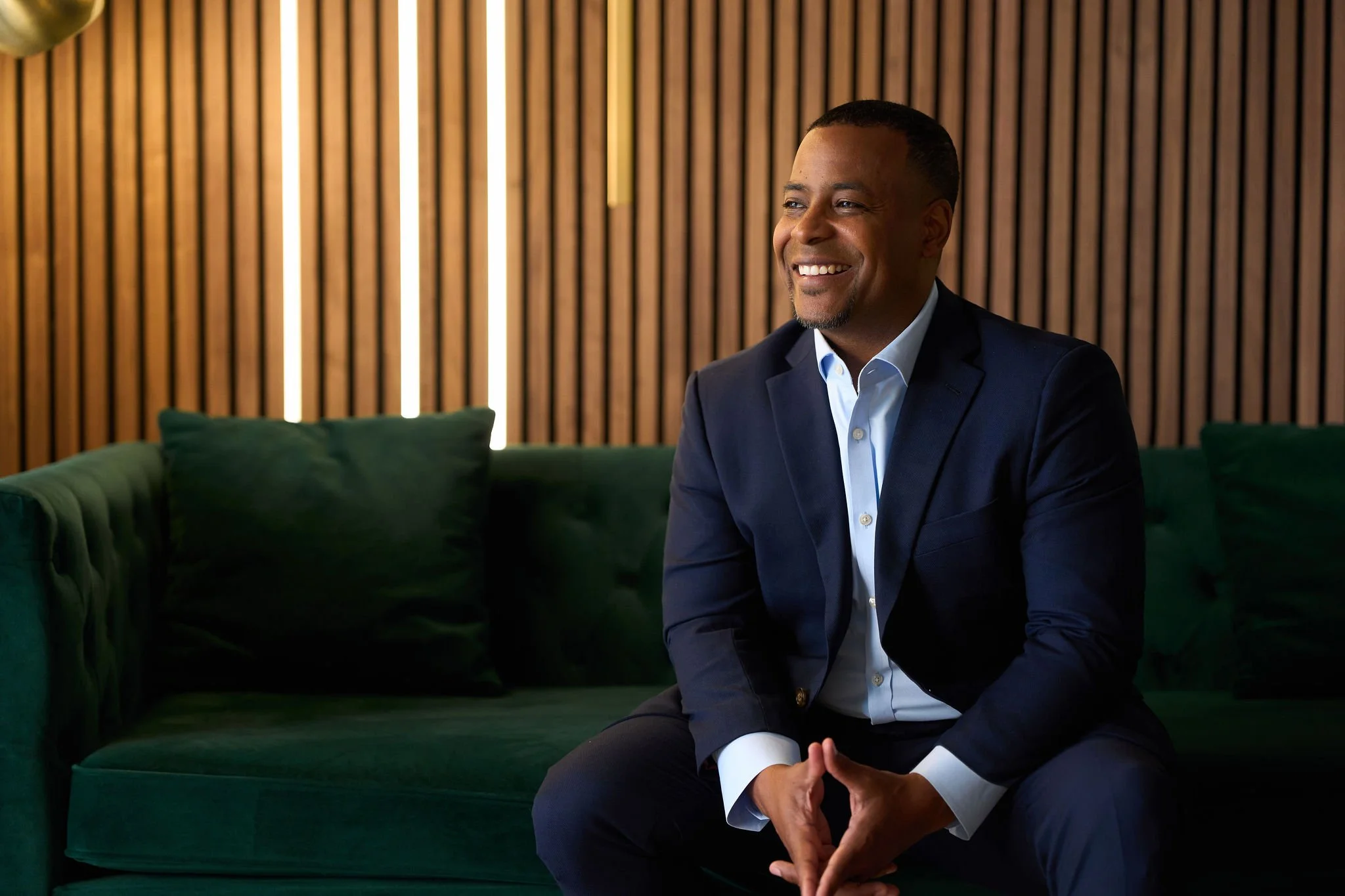
About the Author
Germar is a strategist, storyteller, and student of archetypes. He writes at the intersection of leadership, emotional intelligence, and symbolic power, seeking not to impress, but to illuminate.
His work draws from myth, philosophy, and the quiet disciplines of presence. He believes that true influence begins not with charisma, but with character. You can follow his work at GermarReed.com