
In the early months of 1967, the Caribbean sun beat down upon a small, rented house in Jamaica with a persistence that mirrored the heat of the American streets Dr. Martin Luther King Jr. had recently fled. There were no telephones in this retreat, no frantic aides, no roar of the digital square; there was only the rhythmic surge of the Atlantic and the profound, agonizing silence of a leader who had reached the edge of his own map. King had come to Jamaica to write his final testament, Where Do We Go from Here: Chaos or Community?, a work that found him suspended between the fading memory of a movement’s moral clarity and the jagged, rising smoke of a crisis that defied easy solutions.
In the stillness of that Jamaican veranda, King was not merely drafting a political manifesto; we might interpret his withdrawal as an entry into "Deep Time," a retreat into the archetypal scaffolding of the human soul to diagnose an ailment that transcended policy. While King’s prose focused on the socioeconomic levers of justice, his work raises an enduring question regarding the nature of collective power; is "Community" simply a more palatable word for "Order," and if so, what is the cost of staying in a state of "Chaos" that, while eruptive, remains perpetually vulnerable to the fortress of the conqueror?
Between the lines of his final inquiry, one might observe a logic that predates the modern era by millennia. King’s diagnosis invites us to consider whether the turbulence of an unformed people is a symptom of failure or a ripening of potential; and whether the transition to "Community" requires a radical fusion of fertile energy and institutional preservation. We might interpret this transition as an encounter with an ancient dragon; a force of mythic potential that most of his contemporaries mistook for a mere riot, but which King recognized as the raw material of a new autonomy.
The Turn: The Mythic Pivot
But this moment in 1967 is not merely a quirk of history; it is a symptom of a much larger crisis in how we consider the logic of power. We often assume that "Community" is the natural, peaceful destination of progress, a well-lit room where the furniture is arranged in a predictable, stable geometry. We view "Chaos" as the intruder, the unformed darkness that must be suppressed; yet, through a more rigorous lens, we might suspect that the "Chaos" King witnessed; the fire, the anger, the breakdown of traditional domestic structures; was not merely a lack of order, but a fertile ripening.
In a Hegelian sense, this is the brutal labor of a people attempting to move from raw, unrefined spirit into a reconciled, institutional reality. King was asking, perhaps more loudly than his readers were prepared to hear, whether a community that chooses "Order" without the spark of its own "Creativity" is actually a community at all, or merely a well-maintained cemetery. The "dragon" in this context is the storm of a transitioning people; a raw power that requires an architecture to house it, lest it remain a mere resource for more systematic groups to mine.
"One might interpret King’s inquiry as a question of whether the soul possesses the internal structural integrity to transform eruptive chaos into autonomy." Germar Reed
As Rainer Maria Rilke once observed, “Perhaps all the dragons in our lives are princesses who are only waiting to see us act, just once, with beauty and courage.” We might interpret King’s dragon as the energy of a people in flux; a current of power that requires an anchor. The central issue of self-rule is not whether the storm exists, but whether the community can build the shape required to hold the gold hidden within the fire.
The Fertile Principle: The Matriarchal Current
One of the most provocative dimensions of King’s final inquiry was his engagement with the structure of the Black family. King addressed what he described as the "matriarchal" nature of the Black community, a structure often criticized by the "straight-line" logic of dominant institutions. In a symbolic anatomy of power, we might interpret this matriarchal base as the principle of "Presence in Motion"; the primary engine of survival and cultural fertility.
Because this energy is not always tethered to the fixed axis of an institutional throne, it possesses an adaptive necessity that allows it to survive where rigid structures perish. For centuries, the Black woman acted as the steward of a life that offered no institutional protection; she navigated systemic exclusion by developing a form of power that was teeming, flexible, and fundamentally creative. We might interpret this as a "Matriarchal Current"; a force that manages the ripening of identity in the absence of a fortress.
"The Negro family, though it was fragmented and disrupted, had a strong matriarchal base." Dr. Martin Luther King Jr.
Birth, by its very nature, is an eruptive event; it is a biological eruption that defies the quiet logic of a library. A community led by this teeming energy understands the incubation of power, where "Chaos" is utilized as a beginning rather than feared as an end. This is the source of the culture, the music, and the "vibe" that the world covets; it is a productive energy that is life-giving but, without a bastion of preservation, remains perpetually vulnerable to extraction and rebranding by external forces.
The Fortress of the Conqueror: Preservation as Power
We must now address the operation of the opposing force. Why is it that Black nations and communities, despite being the fonts of global creativity and resource, find themselves dominated? The answer lies not in a lack of creativity among dominant groups, but in their mastery of institutionalization. Historically, dominant powers have functioned as master architects; they do not necessarily create more spirit, but they excel at the recognition, absorption, and preservation of it.
These groups build "Fortresses" of bureaucratic hierarchy, military precision, and legal rigidity. As Michel Foucault might observe, their power lies in the control of the "Archive"; the ability to decide what is remembered, what is scaled, and what is given the weight of history. They view the eruptive "current" of a fertile community as unrefined material. Because they have built the "Order" of the fortress, they can reach into the "Storm" of the creative group, extract its gold, and retreat behind walls that define the legal and economic terms of ownership.
"The central issue of power is not who creates, but who controls what is preserved, scaled, and remembered." Germar Reed
The tragedy that we might interpret through King is that Creativity, without Structure, is defenseless. A community that is "all current and no anchor" will always be navigated by someone else’s ship. The burgeoning current keeps the people alive; but the "straight line" of institutional architecture is what is required to protect that life from external extraction. In the hierarchy of power, the issue is rarely a lack of gold, but a lack of a vault.
The Marriage of Structure: The Black Man’s Burden
As we examine the current landscape, one must ask: have we confused "Order" with "Oppression"? In the necessary rebellion against the "Order" of a supremacist state, many mistakenly abandoned the very concept of "Structure" itself. We allowed the "Dragon" of eruptive chaos to roam free within our own gates, failing to distinguish between the walls of a prison and the walls of a home. King’s book asks: Will we choose Chaos or Community?
If we interpret "Community" as a place where we are merely "productive," we have chosen a perpetual state of flux. If we define "Community" as a place of reconciled "Order," we move toward autonomy. A community led exclusively by the "adaptive necessity" risks a "ripening of exhaustion"; it is a people constantly birthing beauty that they cannot own, archive, or protect. When King suggested a rebalancing of the family structure, we might interpret this as a call for the "Bastion" to return; not as a tool of suppression, but as a necessary, stable logic that provides the unyielding defense of a community's soul.
As Frantz Fanon might argue, for a people to achieve true liberation, they must do more than express their culture; they must build the institutions that define their own historical narrative. The duty of the Black man is to provide the Architecture for the eruptive power that already exists. He must be the "straight line" that protects the "curve"; the fortress that allows the womb to ripen in peace. When the world looks at a Black nation, they should see not just a "resource" of creativity, but an "Order" so rigorous and so unified that the siphoning of its spirit becomes impossible.
The Synthesis: The Geometry of Autonomy
As we look back from the distance of half a century, the "Dragon" has not been slain; it has merely changed its form. We now face the "Chaos" of digital fragmentation and the stiffening of our institutional walls. King’s inquiry in Jamaica was a call for a "Radical Identity Shift"; a move from a group that is merely managed by history to one that archives its own legacy and controls its own scale.
Does Community = Order? No. Community is the "Board" itself. It is the reconciliation where the "Current" of fertility moves us and the "Bastion" of preservation shields us. If we choose "Order" at the expense of "Spirit," we choose a stillness that is indistinguishable from death; but if we choose a "Community" that embraces the "Eruptive power of Chaos" while anchoring it in the "Order of the Patriarch," we choose a future of autonomy.
Dr. King did not leave Jamaica with a set of blueprints; he left with a lens. He left us with the understanding that the choice is not between a riot and a neighborhood, but between a stiffened past and a burgeoning future. The Dragon is at the door. Our task is not to flee from its fire, but to build the fortress that finally claims the gold. We must move beyond the "Performance of the Bloom" and become the master architects of the soil and the stone, ensuring that what we create is what we keep.
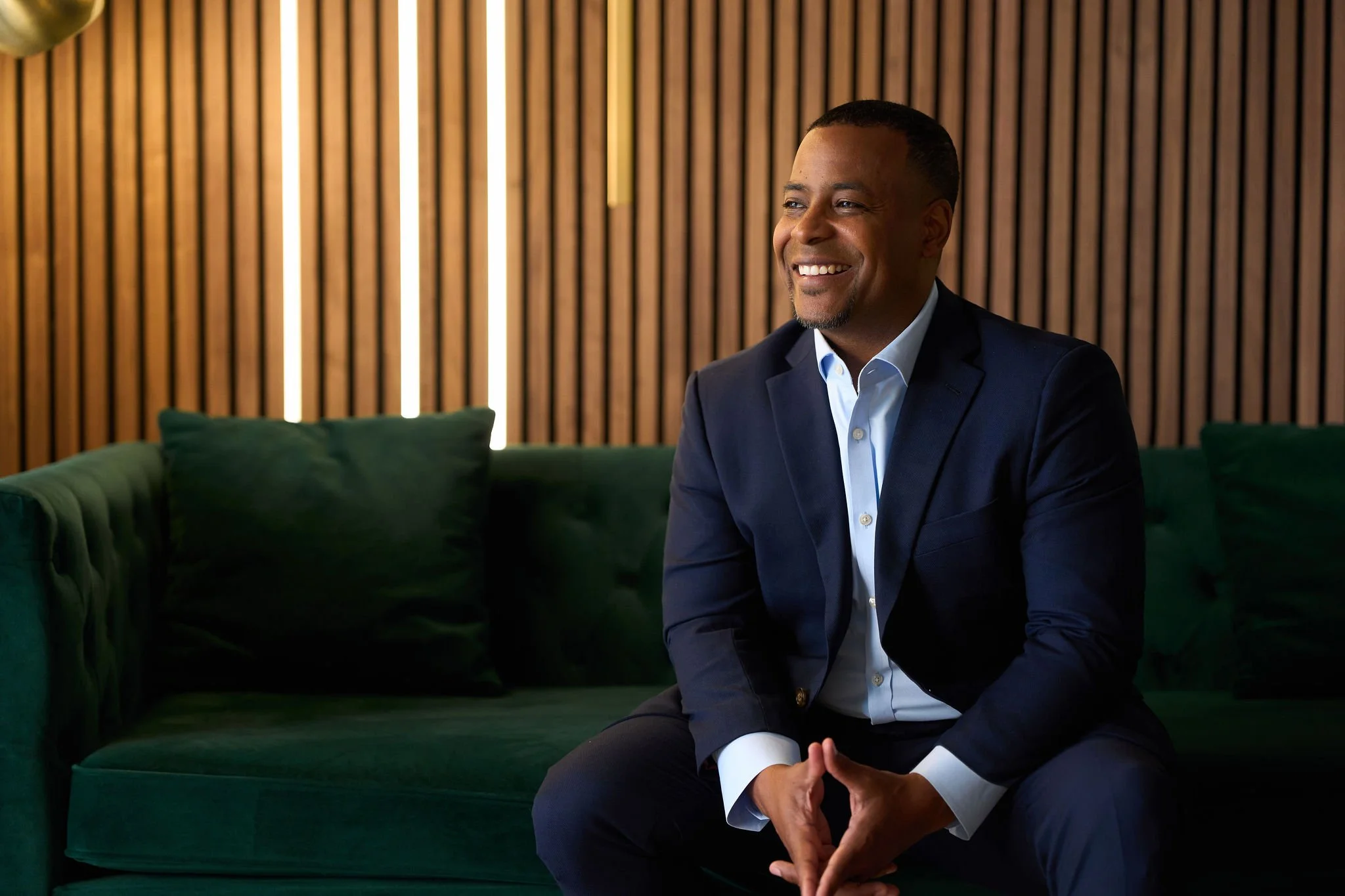
About the Author
Germar is a strategist, storyteller, and student of archetypes. He writes at the intersection of leadership, emotional intelligence, and symbolic power, seeking not to impress, but to illuminate.
His work draws from myth, philosophy, and the quiet disciplines of presence. He believes that true influence begins not with charisma, but with character. You can follow his work at GermarReed.com