
The Meta-Shift: How the Pawn Operates
In the smoke-filled interior of the Café de la Régence in 18th-century Paris, a young man named André Danican Philidor sat before a wooden board and uttered a sentence that would dismantle five centuries of aristocratic military theory. "Les pions sont l’âme du jeu," he declared: "Pawns are the soul of the game." Before Philidor, the pawn was viewed as mere fodder, a structural nuisance to be cleared away so the "noble" pieces—the Knights and Queens—could engage in their kinetic dance. But Philidor saw a deeper geometry. He understood that while the King is the axis and the Queen is the engine, the Pawn is the only entity on the board capable of an irreversible transformation. He realized that the smallest piece is the only one with the power to fundamentally change its own nature.
Philidor did not merely play chess: he identified the Meta-Shift. He understood that the pawn’s strength is not found in its reach, but in its persistence. It is the only piece that cannot move backward. Every step it takes is a permanent reclamation of territory, a slow-motion terraforming of the board. In the taxonomy of power, the Pawn represents the radical potential of the "Long March." It is the archetype of the incrementalist who, through sheer refusal to retreat, eventually reaches the eighth rank and triggers a promotion that collapses the opponent’s reality. Philidor realized, long before the modern grassroots movement or the "compounding" logic of finance, that the soul of the game is found in the grind of the small move.
One might observe that the modern world is currently suffering from a "pathology of the instant." We have entered an era where we crave the "Queen’s Sweep" and the "Knight’s Leap," yet we have become culturally allergic to the one-square-at-a-time logic of the Pawn. We reward the "Exit" and the "Viral Hit," but we have lost the spiritual vocabulary for the "Long March." We are witnessing a crisis of character because we have forgotten the specific, grinding, and essential logic of the Meta-Shift. We have forgotten that any system that lacks a "Pawn Chain" is a system that will inevitably be shattered by the first storm it encounters.
To operate as a Pawn is not to be a victim of the board, but to be the "Architecture of the Possible." It is to move from the "insignificant" to the "inevitable," not as a display of speed, but as a form of supreme geometric persistence. If the King is the anchor and the Queen is the engine, the Pawn is the "Genetic Code" that determines where the anchor can be dropped and how far the engine can run. The Pawn is the embodiment of Irreversible Progress: the realization that the most profound power is the power to never take a step back.
I. The Operating Logic of the Pawn: The Power of Irreversibility
In the taxonomy of power, the Pawn is the board’s most restricted piece. It moves one square. It captures only on the diagonal. It is easily blocked. However, the Pawn’s power is derived from its "Directional Totality": the fact that its movement is a one-way street. Unlike the Queen, who can retreat to safety, the Pawn’s every move is a "Burned Bridge." This creates a psychological pressure on the opponent that the "noble" pieces cannot replicate. The Pawn is a slow-motion existential threat.
"The Pawn’s power is derived from its Directional Totality: every move is a burned bridge, a slow-motion existential threat." Germar Reed
At Work: The Culture-Builder
In the professional landscape, the Pawn archetype is the worker, the manager, or the founder who understands the "Logic of the Grind." While the Knight looks for the disruption and the Bishop looks for the frame-shift, the Pawn looks for the "Next Square." He is the one who understands that a company’s culture is not built in a "Town Hall" meeting, but in the ten thousand small, daily interactions between colleagues. He builds the "Pawn Chain."
The Pawn operates through "Compounding Persistence." His success is measured by his "Reliability": the degree to which he can maintain forward momentum when the "Visionaries" have lost interest. To lead as a Pawn is to realize that your primary function is to be the "Floor" of the organization. You are the one who ensures that the progress made today is never surrendered tomorrow. You move in small steps because a small step that is never retracted is more powerful than a leap that is eventually reversed.
In the Family: The Daily Ritual
To lead a family as a Pawn is to provide a "sovereignty of the mundane." In the domestic sphere, the Pawn is the one who understands that love is a "Long March" of small acts. While the King provides the axis and the Queen manages the current, the Pawn is the one who shows up, day after day, to perform the rituals that make a house a home. He is the one who understands that a child’s sense of security is built on the "straight lines" of consistent presence.
This requires a "Burden of the Ordinary." The Pawn’s work is often uncelebrated because it lacks the "kinetic" drama of the Queen’s movement. But the Pawn knows that a "Pawn Chain" of rituals—dinner at six, a story at eight, a walk on Sunday—is the only thing that can protect the family’s soul from the "centrifugal pathology" of the modern world. Success for the Pawn in the family is found in "Geometric Transformation": the ability to endure the grind of parenting until the "Promotion" of seeing a child become a sovereign adult.
In Negotiations: The Creeping Requirement
In the theater of negotiation, the Pawn does not rely on the "Jolt" of the Knight. He relies on "Encroachment." He enters the room and establishes a small, non-threatening baseline. He doesn't ask for the kingdom: he asks for a single square. But once that square is granted, he never gives it back. He uses the "Logic of the Foot-in-the-Door" to slowly, methodically diminish the opponent’s space.
The Pawn wins by making his progress appear too small to fight, until it is too large to ignore. He understands that most negotiators are prepared for a "Queen’s Strike" but have no defense against a "Pawn’s Crawl." Success for the Pawn is found in the "8th Rank": the moment the opponent realizes that the small concessions have added up to a total loss of sovereignty. He doesn't want to win the argument: he wants to win the board by simply outlasting the opponent's will to resist.
II. The Pawn’s Ecosystem: The Soul of the Board
A Pawn that moves in isolation is a "Passed Pawn" at best and a "Lost Piece" at worst. To be successful, the Meta-Shift must be supported by the broader geometries of the court.
The Pawn and The King: The Floor and the Axis
The Pawn is the King’s "First Defense." The King provide the axis, but the Pawn provides the "Space." A successful Pawn understands that his primary job is to create a "Shield of Persistence" around the King’s stillness. He is the one who takes the brunt of the "Queen’s Storm" so the King doesn't have to move. He provides the "Democratic Legitimacy" of the King’s sovereignty: the King only rules because the Pawns hold the line.
The Pawn and The Queen: The Anchor and the Engine
The Pawn provides the "Tactical Texture" that the Queen uses to navigate. The Queen can only sweep across the board if the Pawns have cleared the path or provided the "Pawn Chain" that limits the opponent’s movement. A successful Pawn doesn't try to move like the Queen: he creates the "Channels of Force" that allow her to strike with precision. He is the "Infrastructural Reality" that makes her kinetic energy possible.
The Pawn and The Knight: The Wall and the Leap
The Pawn and the Knight are the "Counter-Intuition" of the board. The Knight leaps over the barriers that the Pawn builds. A successful Pawn uses his "Straight-Line Persistence" to force the opponent into a cramped position, making the Knight’s "L-shaped" leaps even more lethal. The Pawn builds the prison; the Knight strikes the prisoner. This is the union of "Grind" and "Jolt."
The Pawn and The Rook: The Soul and the Structure
The Pawn and the Rook are the "Long-Term Guardians" of the board. The Rook builds the walls, but the Pawn *is* the wall. A successful Pawn understands that his "Pawn Chain" is the only thing that can support the Rook’s structural integrity. Without the Pawn, the Rook is a hollow wall; with the Pawn, the Rook is an impenetrable fortress. They are the marriage of "Character" and "Process."
III. The Measured Provocation: The Promotion Paradox
One must present a counter-intuitive truth: The Pawn’s greatest utility is found in its "Final Transformation." This is the phenomenon of the Promotion Paradox.
In our modern era, we are taught that you should "be yourself." But the Pawn’s entire purpose is to *not* be itself. The Pawn’s journey is a radical commitment to a version of itself that does not yet exist. It endures the insignificance of the first seven ranks solely to achieve the "Meta-Shift" of the eighth. This is the "Ethics of the Aspirant."
"The Pawn’s entire purpose is to not be itself: it endures insignificance to trigger a Meta-Shift that collapses the opponent’s reality." Germar Reed
The successful Pawn must learn the art of "Strategic Humility." He must know that his "Small Move" is a part of a "Large Transformation." If he becomes resentful of his own insignificance, he becomes a "Brittle Pawn," a piece that stops moving because it feels unappreciated. He must learn that his most powerful move is not the "Step" itself, but the "Vision" of the Queen he will eventually become. He is the only piece that can change the rules of the game in mid-play.
IV. The Shadow of the Pawn: The Martyr and the Drifter
Every archetype contains its own failure state. For the Pawn, the shadow manifests in two directions:
The Martyr: This is the Pawn who has lost his "Self-Sovereignty." He allows himself to be sacrificed not to achieve a strategic goal, but because he believes his own life has no value. He confuses "Stewardship" with "Self-Destruction." He is the employee who works eighty hours a week for a company that doesn't know his name, or the parent who disappears entirely into the needs of the child. He is a "Lost Piece" who never reaches the eighth rank.
The Drifter: This is the Pawn who has lost his "Chain." He moves forward without a connection to the other pieces. He is a "Doubled Pawn" or an "Isolated Pawn," a piece that has become a liability because it can no longer be protected. He is the person who "hustles" without a plan, moving for the sake of motion but with no hope of a "Meta-Shift." He confuses "Activity" with "Progress."
Success for the Pawn is found in "Connected Persistence": the ability to maintain the grind while remaining fundamentally linked to the broader sovereignty of the board.
V. Synthesis: The Soul of the Game
To be the Pawn is to realize that you are the primary variable of the game’s future. You are the piece that reminds the board that "Greatness" is an achievement of "Small Steps." It is the unglamorous labor of being the "Foot Soldier" so that the "Whole Kingdom" can be transformed.
During "Good Times," the Pawn’s job is to "Terraform the Board." He uses the stability of the era to push the lines forward, claiming the territory that the next generation will use to build their "Rook’s Walls" and "King’s Axis." He is the "Architect of the Possible."
During "Bad Times," the Pawn’s job is to "Hold the Chain." He provides the "Dense Defense" that prevents the opponent from penetrating the center. He is the one who refuses to retreat, even when the "Noble Pieces" have fallen. He is the reason the game is never truly over until the final square is occupied.
One might observe that we do not need more "visionaries" who refuse to grind today. We have plenty of those managing the noise. What we need are Pawns. We need people who are willing to take up the "Small Move" of their own character, embrace the "Long March" of their own potential, and stand in the "Meta-Shift" of their own transformation.
The eighth rank is waiting. The board is waiting for the soul.
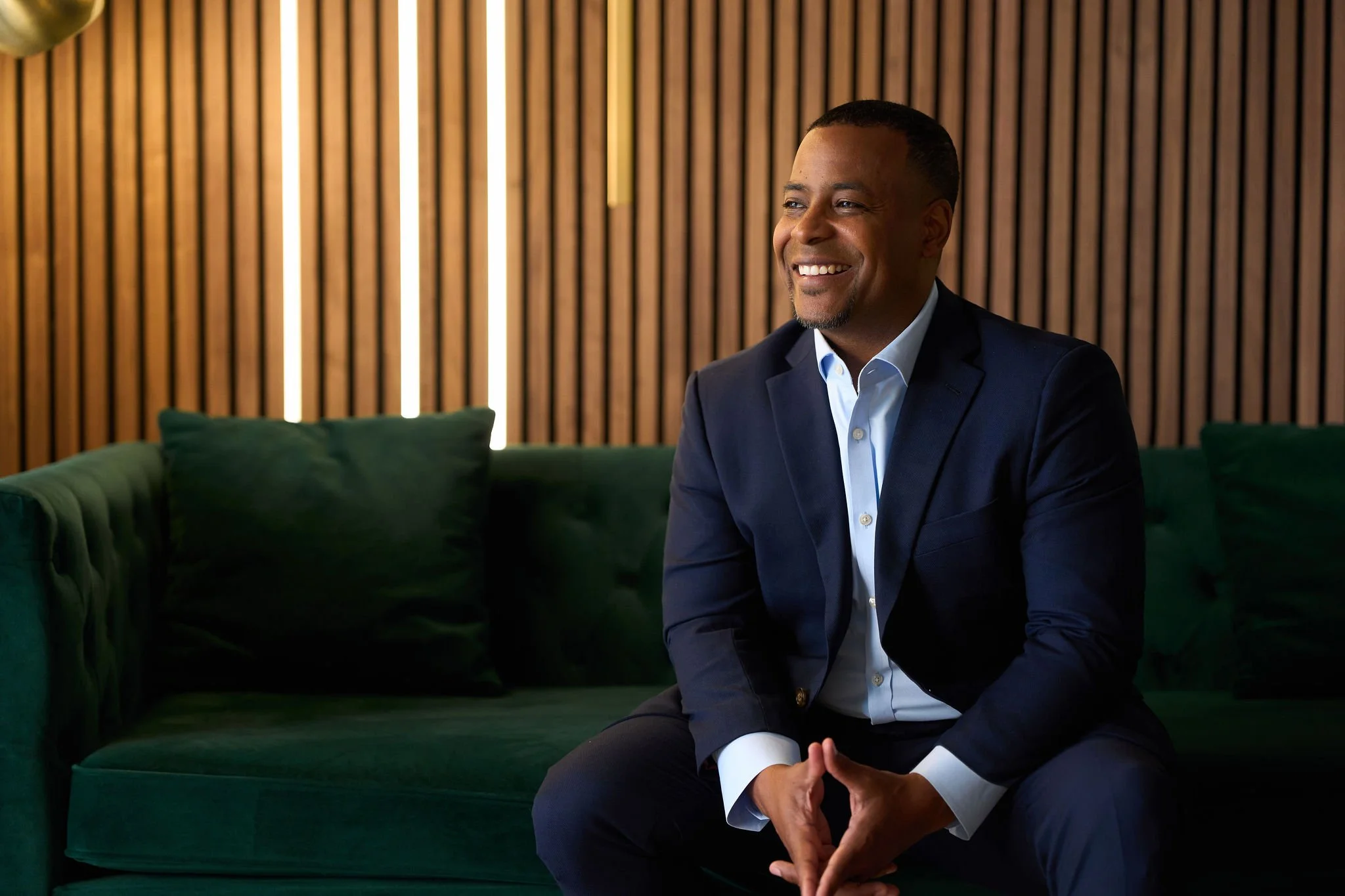
About the Author
Germar is a strategist, storyteller, and student of archetypes. He writes at the intersection of leadership, emotional intelligence, and symbolic power, seeking not to impress, but to illuminate.
His work draws from myth, philosophy, and the quiet disciplines of presence. He believes that true influence begins not with charisma, but with character. You can follow his work at GermarReed.com