

Crown & Shadow: Essays from the Chessboard of Power
A study in leadership, archetype, and the silent architecture of the game.
Crown & Shadow is a philosophy of Black family, history, power and legacy, understood through the language of chess.
At its center is a simple belief: the family is our first institution and our first board. It is where we initially encounter authority, belonging, protection, sacrifice, conflict, inheritance and responsibility. Before we learn how to move through the world, we learn or fail to learn, how to hold a position within the family.
On this board, every piece carries a distinct responsibility.
The King is the stabilizing center. He accepts responsibility for the family’s protection, standards, continuity and long horizon. His centrality is not defined by domination, but by consequence: when he is killed, removed or separated from the board, the stability of the entire family is threatened.
The Queen is the family’s advancing and expanding force. Her range allows the family to move across the board, recognize possibilities, adapt to changing conditions and turn stability into progress. The King holds the center; the Queen extends its reach. Their authority is coordinated rather than competitive.
The Bishop represents counsel, faith, wisdom and the ability to see the angles that direct power may overlook. The Knight represents courageous and unconventional movement, the capacity to cross barriers that cannot be overcome by following the expected path. The Rook, or Castle, preserves the family’s structure through boundaries, rituals, traditions and inherited ways of knowing.
The pawns represent children and emerging generations. They do not begin without value; they begin without completion. Properly protected, taught and allowed to advance, they carry the potential to become more than the position into which they were born.
These ideas sometimes appear directly in our work. At other times, they move beneath the surface of a historical story, a family conversation or an examination of institutional power. But the board is always present.
Crown explores stewardship, construction, inheritance and the visible responsibilities of leadership. Shadow examines preparation, protection, pressure, blind spots and the difficult truths families must confront if they intend to endure.
Through essays, historical reflections, family scenes and perspectives from contributing writers, Crown & Shadow asks a lasting question:
What must Black families build, protect and pass forward so that the next generation inherits more than survival?

The Sovereign Axis: How the King Operates
To operate as a King is not to occupy a position of privilege, but to accept a position of gravity. In an era defined by centrifugal pathology and performative hustle, this inquiry explores the "Operating Logic" of the unmoving center. Discover how the Sovereign Archetype maintains the board’s alignment through non-reactive presence, the power of the vacuum in negotiation, and the necessary weight of the silent crown.
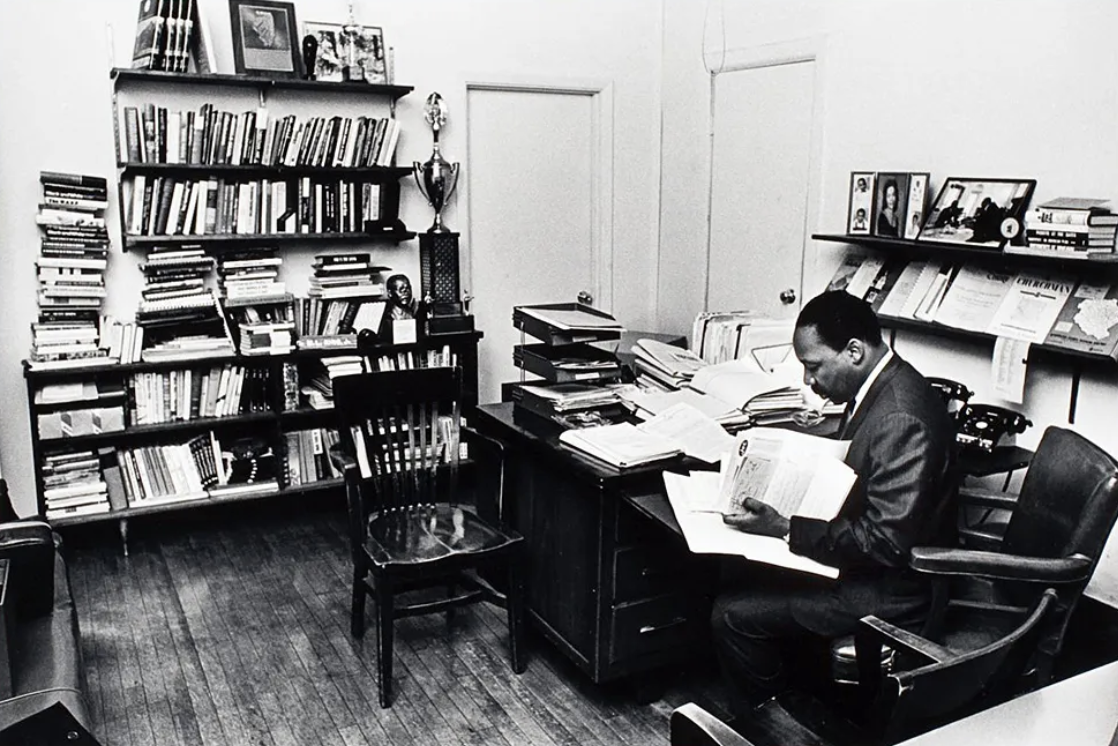
The Architecture of the Storm: Dr. King and the Geometry of the Dragon
One might observe that the modern public has sanitized Dr. King’s final inquiry into a polite, moral preference for 'togetherness.' We have been taught to view the title Chaos or Community? as a simple choice between a riot and a neighborhood. But in the agonizing silence of 1967, King was staring at a far more terrifying horizon. He understood that the 'Chaos' of the Black soul was not a pathology to be cured, but a generative womb, a biological storm that had birthed the world’s most coveted creativity. Yet, he saw with a Bishop’s clarity that without the 'Community' of a weaponized order, this creativity would remain nothing more than a resource for the conqueror to mine. He was not asking us to choose a soft peace; he was asking us to build an architecture of resistance that could finally claim the gold hidden within the dragon’s fire.

The Gravity of the Center: A Protocol for the Sovereign Father
In an age of geopolitical tremors and institutional retraction, the modern provider faces a clarifying fire. True stability is not a loan granted by the state; it is a sovereign architecture engineered from within.
Germar Reed examines the "King’s Burden", the requirement of unmoved stillness in a world of kinetic panic, and how to deploy the family as a strategic board to navigate the coming economic winter. This is a protocol for the man who refuses to be a "Leased Manager" of his legacy and instead chooses to become its sovereign architect.

The Autumn of the Aesthetic: On the Crisis of the Superficial Harvest
We have become a society of master harvesters who have forgotten the labor of the soil. As the saying goes: "When people fall in love with your flowers and not your roots, they don't know what to do with you when autumn comes." It is a sentiment that strikes at the heart of our modern malaise: the terrifying realization that we are being valued for our output, not our essence.

The Politics of Care and the Politics of Power
In many families there is an old saying: a mother’s love comforts you, while a father’s love prepares you. One tells you that you are safe; the other insists that you must grow. Both are forms of love, and both are necessary. But they do different work in the world.
Lately I’ve begun to wonder whether this distinction helps explain something about American politics, and particularly about the political experience of Black Americans.

The Long March: Why the Pawn Is the Only True Agent of Change
If she survives the long march to the other side, she transforms. She can become a Queen, a Rook, a Bishop, even the power she once served. The humblest piece holds the potential for the most radical metamorphosis.
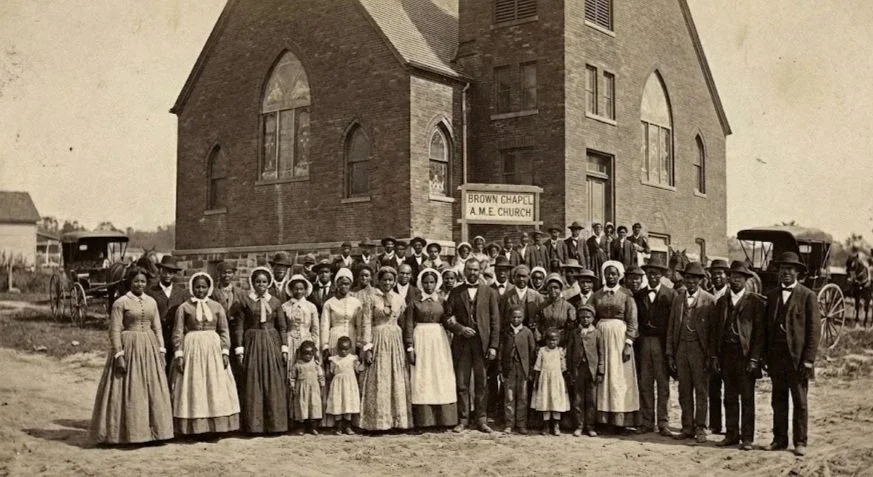
From the Kennebec to the Huron
The story of the Bow family unfolds across four borders and half a continent: from New England’s maritime towns to the gold fields of California, from exile in Canada to settlement in Ypsilanti. Their journey, carefully documented, strategically chosen, reveals a different architecture of Black agency. Long before the Great Migration reshaped American cities, the Bows had already mastered a politics of mobility, skilled labor, and institution-building that allowed them to claim citizenship on their own terms.
This is not a story of escape alone. It is a story of return.
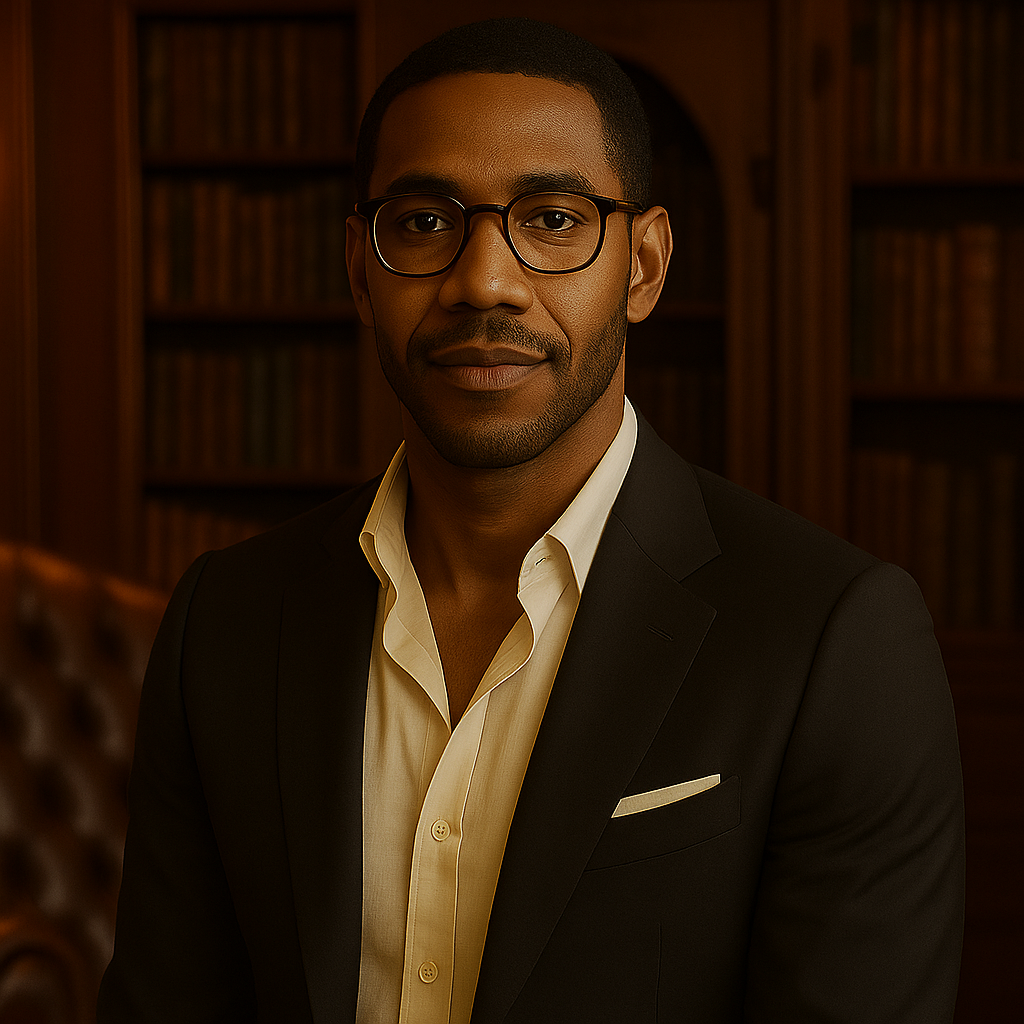
The Bishop — Vision in Angles
The Bishop often sees what others cannot, or will not. He notices patterns long before they manifest, and in this awareness, he carries a lonely weight. When he speaks too early, he is dismissed. When he waits too long, he is blamed for silence.
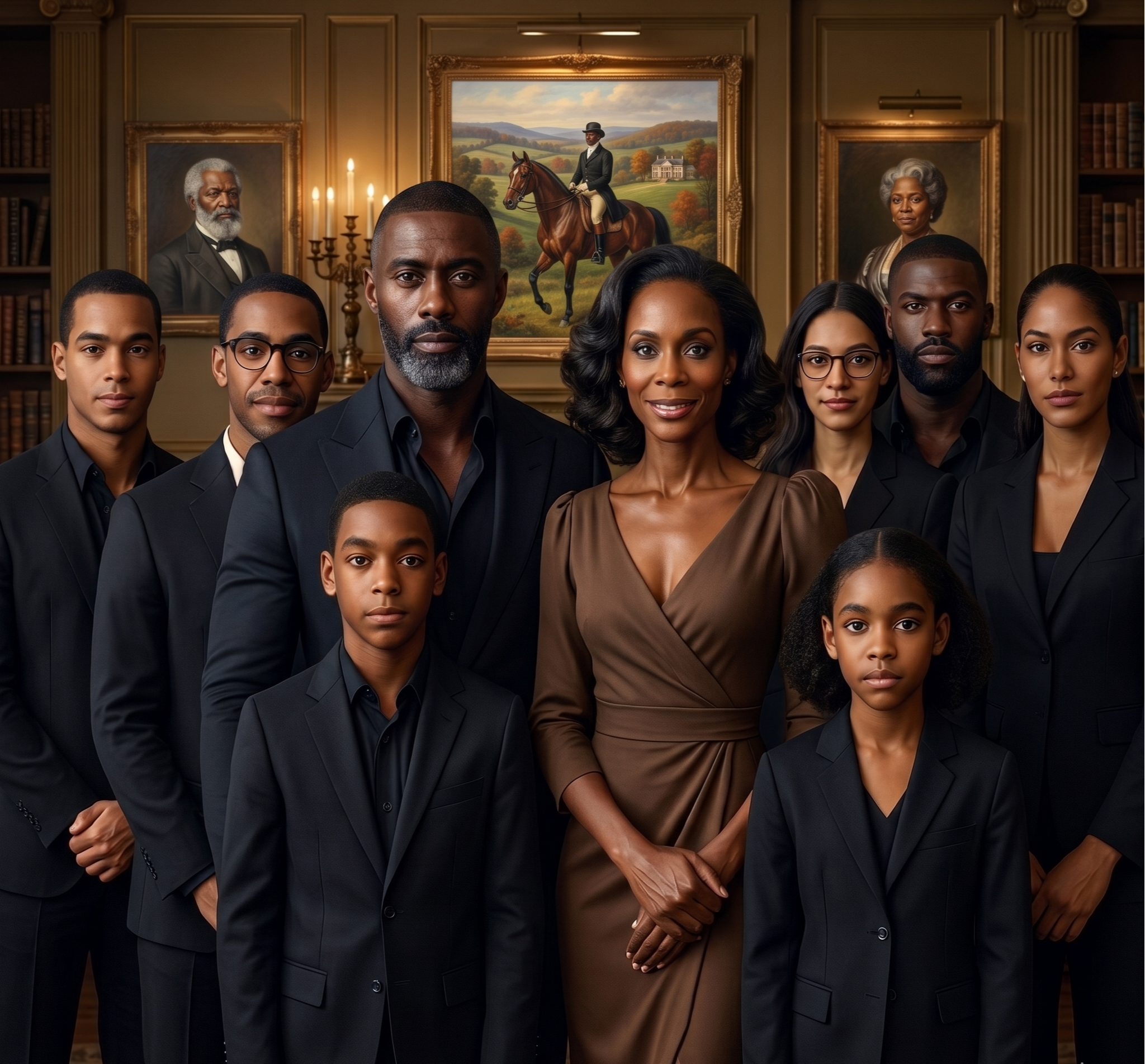
The Board Assembled
Families, like kingdoms, do not rise or fall on love alone. They rise or fall on balance, on the delicate interplay of roles within them, on whether each member leans too far into strength or too deep into shadow, on whether the whole can withstand the tension between preservation and change. If we look closely, we see that every family is a kind of board. Each person, each archetype, carries not only an individual burden but also a structural one: to move in a way that sustains the kingdom.

The Rook — Structure and Sovereignty
He holds the lines others rely on. He protects the King’s flank, guards the vulnerable corners, and when the board opens, he becomes a force of terrifying reach. Few pieces can match his long, unbroken movement down the ranks and files.

The Knight — Disruption with Precision
The Knight archetype represents disruption. He embodies the power of unconventional thinking, of breaking patterns while still playing by the rules. He is the strategist of surprise, the reminder that no system, no matter how rigid, is immune to sudden redirection.

The Queen — Motion in All Directions
In chess, the King and Queen are not rivals. They are complements.
The King holds the center. The Queen shapes the field. He embodies stability. She embodies possibility. Together, they create a rhythm: one enduring, the other expanding.

The Stillness of Power: What It Means to Be the King
In chess, the King moves one square at a time, yet the entire game revolves around him. He cannot move hastily. He cannot afford panic. His power is presence, not noise. And that presence, though often unglamorous, is essential. Without it, the game ends.
About the Author
Germar Reed is a husband, father, writer, Marine Corps veteran and data and analytics executive. A lifelong student of Black history, family history and institutional power, he created Crown & Shadow to examine how Black families establish order, withstand pressure and pass strength, wisdom and possibility from one generation to the next. His writing uses history as evidence and chess as a language for understanding responsibility, protection, strategy and legacy.