
The Hand that Feeds, the Hand that Starves:
A Meditation on the Court and the Reclamation of the Black Interior
In the autumn of 1787, within the hushed and candlelit confines of St. George’s Methodist Episcopal Church in Philadelphia, a quiet revolution was ignited not by a decree but by a hand on a shoulder. Richard Allen and Absalom Jones, two men who had purchased their own freedom from the physical machinery of bondage, knelt to pray in a house of God they had helped build. As the prayer began, they were not met with the silence of the divine: they were met with the blunt force of the human. A white trustee, offended by their presence in the gallery, physically attempted to pull them from their knees while the prayer was still in motion. One might imagine the sound of wood floorboards creaking and the heavy, rhythmic breathing of men who had survived the auction block only to find their spiritual dignity challenged in the very seat of brotherly love.
Allen and Jones did not fight. They did not petition the elders for a more equitable seating chart or wait for a committee to review the bylaws of the Methodist fellowship. They waited until the prayer was over, and then, in a moment of cinematic gravity, they stood and walked out of the building. In that single, rhythmic stride toward the door, they were no longer merely free men in a legal sense. They were becoming the authors of their own destiny. They did not leave to find another church: they left to build the African Methodist Episcopal Church. It was a foundation of communal integrity that would stand for centuries, an internal world built not because the state allowed it, but because the soul demanded it.
But this moment in 1787 is not merely a quirk of early American history. It is a symptom of a much larger crisis in how we consider the logic of power today. As the modern Supreme Court moves with a cold and rhythmic precision to dismantle the protective walls of the Civil Rights Act, specifically the voting rights provisions that were once thought to be the unmovable floor of our democracy, the Black community faces a familiar and agonizing turn. We have treated the state as a benevolent guardian who grants us rights, forgetting an ancient truth that has echoed through the halls of every movement for self-determination. This moment is not just a legal setback: it is a spiritual diagnostic.
"If you give a man the power to feed you, you give him the power to starve you." Anonymous Strategy of the Interior
While this axiom has been whispered by revolutionaries and shared in the quiet corners of barbershops for generations, its origin is less a single name and more a collective realization of the vulnerable. It is a law of nature: dependency is the precursor to hunger. To rely on the hand of the state to provide the nourishment of our civil existence is to accept that the same hand can, at any moment, close into a fist. One might observe that our current distress is the inevitable result of a people who have focused so intently on the door of the guest house that they have forgotten how to tend to the foundations of their own home.
The Logic of the Leased Right
One might observe that the modern crisis of voting rights is less about the loss of a legal lever and more about the exposure of a strategic vulnerability. For decades, the American Project has operated under the assumption that the progress of the 1960s was a unidirectional march toward an inevitable horizon of equity. We viewed the Voting Rights Act of 1965 as a permanent shield, a historical finality that protected our collective voice. We believed that the blood spilled on the Edmund Pettus Bridge had purchased a permanent deed to the democratic process.
However, a more rigorous lens reveals a harsher reality. Rights that are granted by a system are not rights: they are leases. When the judicial system decides to retract its protection, as it did in the 2013 Shelby County decision and more recently in its narrowing of what constitutes discrimination at the polls, those who have relied solely on that protection find themselves standing on a floor that has suddenly turned to vapor. The Supreme Court's actions are a correction of the public window back toward a state where power is only what you can defend with your own internal strength. One might suspect that the state has not "taken" our power: it has simply demonstrated that we were borrowing theirs.
In a Hegelian sense, this is the brutal labor of a people attempting to move from a raw, unrefined spirit into a reconciled, institutional reality. We have spent half a century asking for a seat at a table that is owned, operated, and maintained by a logic that does not historically favor our survival. We have mistaken visibility for vitality. We have mistaken the presence of a Black face in a high office for the presence of Black power in the foundation of the community. The "starvation" we feel today is the hunger of a people who have outsourced their political and social nutrition to an entity that no longer feels the need to provide it.
The Siren Song of the Center
To explain this pathology, we must look at the structures of the Black experience before the great migration toward the center. Historically, the community survived by building what one might call a "Fortress of the Interior." Before the era of integration, our institutions were built with the logic of survival. They did not ask for permission to exist. They existed because the alternative was extinction. The Church, the HBCU, and the mutual aid societies were not merely buildings: they were the scaffolding of a nation within a nation. They provided a "straight-line" logic of self-rule that allowed us to navigate a world of "diagonal" traps.
The measured provocation we must face today is this: Integration, while a moral necessity and a victory for justice, may have inadvertently caused a decay of our internal foundations. In our haste to occupy the spaces of the broader society, we allowed our own houses to fall into disrepair. We traded the independence of our own economic and social ecosystems for the lobby of a system that never truly intended to let us into the inner sanctum. We gave the power to feed our children’s minds to a state that now demonstrates the power to starve our political agency. We were so busy demanding the right to eat at the lunch counter that we stopped building the kitchens that once fed the movement.
As the philosopher Michel Foucault might observe, the power of the state lies in the control of the archive and the institution. When we integrated, we did not just integrate our bodies: we integrated our dependencies. We moved our money into their banks, our children into their schools, and our faith into their political parties. We effectively dismantled our own silos of self-reliance in exchange for the promise of inclusion. But inclusion is a gift that can be rescinded. The internal integrity of the Black community in 1940 was, in many ways, more rigorous than it is today because it had no other choice. It was a community that knew how to look within because there was nowhere else to look.
"The central issue of power is not who creates, but who controls what is preserved, scaled, and remembered." Germar Reed
The tragedy we must interpret through the current judicial retrenchment is that creativity without structure is defenseless. A community that produces the music, the culture, and the labor for a society but owns none of the institutions that protect those assets is a community that is perpetually vulnerable to extraction. We are the "current" of the American river, but we have neglected to build the "anchor" that keeps the river from being diverted or dammed at the whim of the powerful.
The Three Pillars of the Interior
We must now turn our gaze toward the three frameworks that integration and the "Siren Song" of the center caused us to overlook. These are the foundations that still exist, however weathered they may be, and they remain the only credible response to a state that seeks to starve our political relevance.
I. The Church: The Weight of the Soul. Historically, the Black Church was the community’s primary engine of order. It was not just a place of Sunday worship: it was a credit union, a school, a town hall, and a recruitment center. It provided a framework where value was defined by the community, for the community. When the state failed to provide a safety net, the church provided the mutual aid. When the state failed to provide a voice, the pulpit provided the mandate. It was the "Rook" of our social board, a straight-line defense that could not be easily bypassed.
The tragedy of the modern era is that many of these institutions have shifted from being engines of autonomy to performers of influence. We have seen a movement away from the unyielding defense of the community’s internal needs toward a desire for a seat at the political table. We must ask: has the church remained a fortress, or has it become a mere waiting room for external validation? To reclaim the power to feed ourselves, the church must return to the business of building the world it wants to see, rather than merely asking the state to be more merciful.
II. The HBCU: The Foundry of Vision. The HBCU was born from the starvation of the 19th century. Because we were barred from the halls of white academia, we built our own. These institutions were not just alternatives: they were specific environments designed to foster a way of seeing the world that the state could not provide. They were the developers of the "oblique vision," the ability to see the diagonal traps of a world built on our exclusion.
Integration, however, created a drain of talent toward elite, predominantly white institutions. While this opened doors for individuals, it weakened the collective archive. We began to value the validation of the ivy-covered wall more than the utility of our own red brick. We forgot that the purpose of the HBCU was not just to produce graduates, but to produce a sovereign mind that could not be starved by a changing political tide. We must reinvest in these foundries as our primary intellectual centers, not as secondary options for the locked out.
III. The Black Family: The Anchor and the Storm. Perhaps the most profound framework we have neglected is the unified logic of the Black family. In the deep time of our history, the family was not a small unit confined to a single house: it was a duality of essential forces. The Black Father stood as the unyielding anchor, the fixed point of protection and provision who provided the practical solutions to an often insoluble world. He was the problem solver of the interior, the one who ensured that while the world outside was a landscape of volatility, the world inside was a place of predictability and safety. His duty was to provide the secure perimeter and the necessary resources so that the community could flourish from within.
Working in concert with him was the Matriarchal Current, that teeming and adaptive storm of creative energy that kept the family vibrant and flexible. While the father provided the anchor, the mother provided the movement. Together, they worked as a single, rhythmic unit of survival. They understood that protection and vitality were not opposing concepts, but two sides of the same coin of autonomy. Integration and the atomized logic of the dominant culture fractured this synergy, encouraging us to break our clans into isolated units. We traded the structural integrity of the village and the balanced power of the household for the individual career. To rebuild, we must recognize that the family is the primary unit of our order: when the anchor and the storm work together, the community becomes impossible to starve.
The Synthesis: The Anatomy of a New Autonomy
As we look back from the distance of half a century, the challenge has not been slain: it has merely changed its form. We now face a state that is systematically removing the guardrails of our progress. But this is only a crisis if we believe our progress is something the state owns. King’s inquiry in Jamaica was a call for a radical identity shift, a move from a group that is merely managed by history to one that archives its own legacy and controls its own scale.
Does Community equal Order? No. Community is the framework itself. It is the reconciliation where the current of our creativity moves us and the bastion of our internal institutions shields us. If we choose order at the expense of spirit, we choose a stillness that is indistinguishable from death. But if we choose a community that embraces its own internal logic while anchoring it in the structures we have already built, we choose a future of autonomy.
Dr. King did not leave Jamaica with a set of blueprints: he left with a lens. He left us with the understanding that the choice is not between a riot and a neighborhood, but between a stiffened past and a burgeoning future. The "starvation" threatened by the Supreme Court is a provocation. It is a test of our internal integrity. It is a reminder that the order of the state is not a home: it is a temporary shelter. Our task is not to lament the loss of the lease, but to reclaim the stewardship of our own lives.
Independence is not something that is given. It is something that is maintained through the unglamorous labor of upkeep. If we choose to remain a people who are merely fed by the state, we will always be at the mercy of its whims. But if we choose to build our own foundations, to own the schools that teach our children, the banks that hold our wealth, and the families that anchor our spirit, we become the authors of our own future. We must move beyond the performance of the bloom and become the master builders of the soil and the stone.
Richard Allen walked out of a church that would not let him pray in peace, and he built a world where he could. He understood that the power to pray was not something to be negotiated with a trustee: it was something to be seized in the street and housed in a new building. The Supreme Court may have the power to starve the legal protections of the past, but they have no power over the house we build for ourselves. We have been here before. We know how to build in the dark. We know how to turn the silence of the state into the music of our own movement.
About the Author
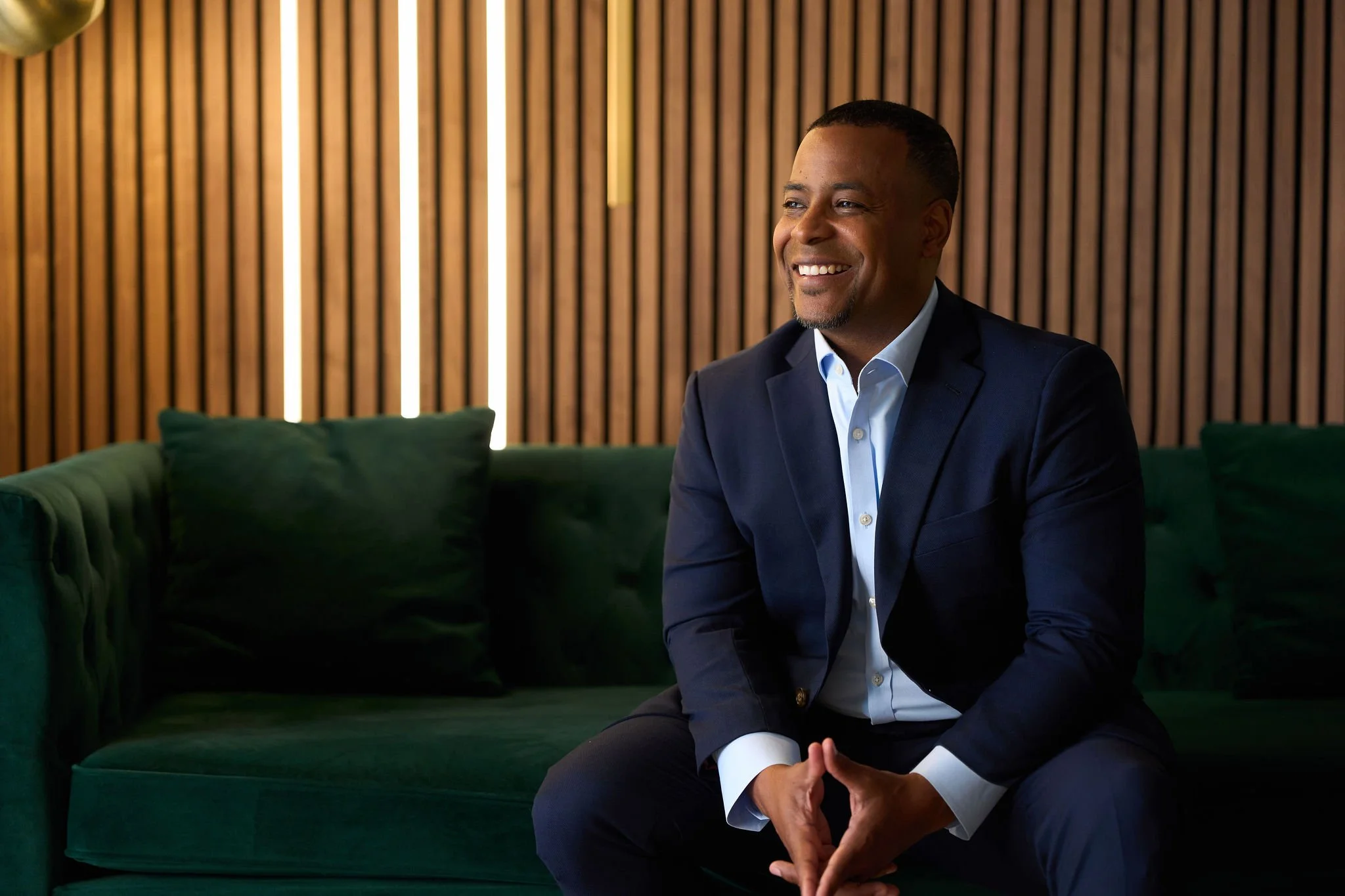
Germar is a strategist, storyteller, and student of archetypes. He writes at the intersection of leadership, emotional intelligence, and symbolic power, seeking not to impress, but to illuminate.
His work draws from myth, philosophy, and the quiet disciplines of presence. He believes that true influence begins not with charisma, but with character. You can follow his work at GermarReed.com