

Crown & Shadow: Essays from the Chessboard of Power
A study in leadership, archetype, and the silent architecture of the game.
Crown & Shadow is a philosophy of Black family, history, power and legacy, understood through the language of chess.
At its center is a simple belief: the family is our first institution and our first board. It is where we initially encounter authority, belonging, protection, sacrifice, conflict, inheritance and responsibility. Before we learn how to move through the world, we learn or fail to learn, how to hold a position within the family.
On this board, every piece carries a distinct responsibility.
The King is the stabilizing center. He accepts responsibility for the family’s protection, standards, continuity and long horizon. His centrality is not defined by domination, but by consequence: when he is killed, removed or separated from the board, the stability of the entire family is threatened.
The Queen is the family’s advancing and expanding force. Her range allows the family to move across the board, recognize possibilities, adapt to changing conditions and turn stability into progress. The King holds the center; the Queen extends its reach. Their authority is coordinated rather than competitive.
The Bishop represents counsel, faith, wisdom and the ability to see the angles that direct power may overlook. The Knight represents courageous and unconventional movement, the capacity to cross barriers that cannot be overcome by following the expected path. The Rook, or Castle, preserves the family’s structure through boundaries, rituals, traditions and inherited ways of knowing.
The pawns represent children and emerging generations. They do not begin without value; they begin without completion. Properly protected, taught and allowed to advance, they carry the potential to become more than the position into which they were born.
These ideas sometimes appear directly in our work. At other times, they move beneath the surface of a historical story, a family conversation or an examination of institutional power. But the board is always present.
Crown explores stewardship, construction, inheritance and the visible responsibilities of leadership. Shadow examines preparation, protection, pressure, blind spots and the difficult truths families must confront if they intend to endure.
Through essays, historical reflections, family scenes and perspectives from contributing writers, Crown & Shadow asks a lasting question:
What must Black families build, protect and pass forward so that the next generation inherits more than survival?
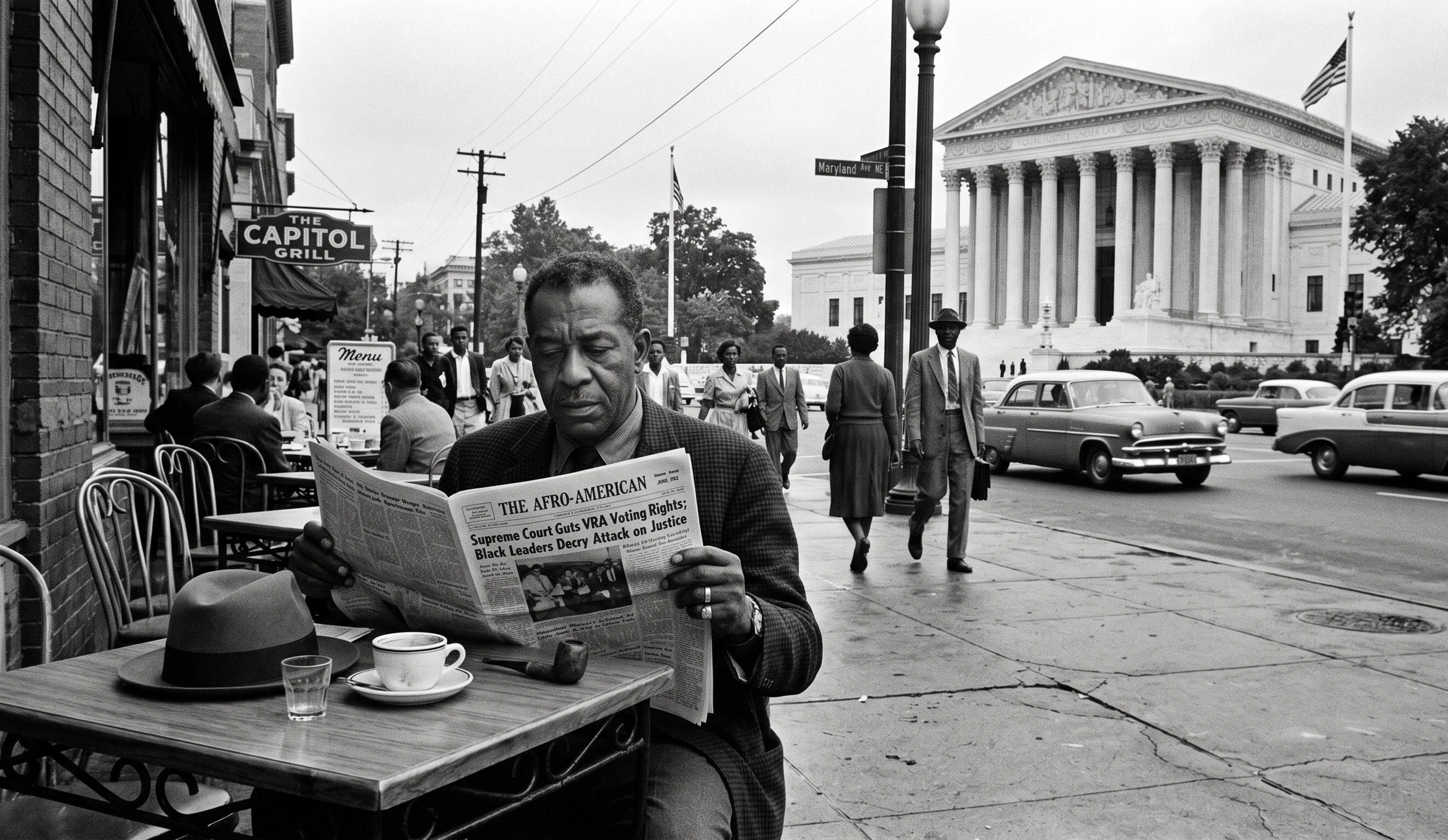
The Hand that Feeds, the Hand that Starves:
In the hallowed halls of St. George’s in 1787, Richard Allen walked out not to find another church, but to build a world of his own.
As modern legal protections are dismantled by a cold, rhythmic judicial logic, we must reckon with an ancient, unyielding truth: a community that relies on an external hand for its bread is a community that lives at the mercy of that hand's closure. This inquiry explores the necessity of reclaiming our internal foundations, the father as anchor, the church as bastion, and the family as the axis of survival, that integration tempted us to neglect. It is a call to move from the performance of the bloom to the mastery of the soil.
About the Author
Germar Reed is a husband, father, writer, Marine Corps veteran and data and analytics executive. A lifelong student of Black history, family history and institutional power, he created Crown & Shadow to examine how Black families establish order, withstand pressure and pass strength, wisdom and possibility from one generation to the next. His writing uses history as evidence and chess as a language for understanding responsibility, protection, strategy and legacy.