
The Efficient Zero: Labor’s Hard Ceiling in the Age of Autonomous Compute
The Efficient Zero
The Federal Reserve has finally stopped squinting at the sun. The April 2026 labor data confirms a reality that "The Rational Drift" has modeled for eighteen months: the U.S. economy has entered a state of Efficient Stagnation. For the first time in the post-industrial era, we are seeing a total decoupling of GDP growth from payroll expansion. The headline is a flatline. Zero net job growth.
The friction point is not a lack of capital or a decline in consumer demand. It is the arrival of the Human-Compute Parity Threshold. Organizations have updated their "Priors". In the legacy model, a 2% increase in demand required a 1.5% increase in headcount. In the 2026 model, that same demand is met by a 0.5% increase in API calls and a restructuring of existing workflows. We are witnessing the "Ghost in the Payroll", work is being performed, value is being created, but the traditional W-2 employee is no longer the primary unit of production.
This is not a recession in the classical sense. It is a structural "Rationalization." The labor market has hit a ceiling not because of a lack of work, but because the "Marginal Cost of a Human" has finally exceeded the "Marginal Cost of an Autonomous Agent" across the median of the knowledge economy.
The Probability Matrix: 2026–2028 Forecast
The following matrix utilizes the SBOF Probability Calibration Scale to map the trajectory of the labor-compute transition.
| Outcome Scenario | Probability | SBOF Calibration | Confidence Visual |
|---|---|---|---|
| The Jobless Plateau: Continued 0%–0.5% net growth through 2027. | 78% | Highly Probable | |
| Corporate Purge: Major Fortune 500 layoffs (15%+) as "AI First" models mature. | 62% | Leaning Towards | |
| Legislative Intervention: Mandatory "Human-Ratio" tax credits/penalties. | 42% | Possible but Unlikely | |
| Blue-Collar Premium: 5%+ wage growth in non-automatable physical trades. | 85% | Highly Probable | |
| Hyper-Productivity Rebound: New industries emerge to absorb the 0% gap. | 12% | Low Probability |
Historical Restructuring Norms
To understand the current stagnation, we must look at the SBOF Prior. Historically, a Fortune 500 company facing two quarters of declining revenue or stagnant market share has a base rate of ~68% for undergoing a major corporate restructuring or layoff.
However, the "New Evidence" suggests a deviation from this historical norm. In 2026, companies are not waiting for revenue to decline. They are restructuring while revenue is growing or stable. We call this the Preventative Pivot.
The Prior: Historically, layoffs were a sign of distress.
The Update: Today, "Zero Growth" in hiring is a sign of operational optimization.
The Result: The probability of a "Succession Planning" event or a "Leadership Turnover" spikes to 80% when a CEO fails to integrate AI-driven cost-reduction within a three-year window.
The market no longer rewards the "hiring of the best people." It rewards the "elimination of the most expensive tasks." The historical base rate for technological displacement has shifted from a slow, generational churn to a surgical, quarterly re-alignment.
Hard vs. Soft Signals
The Rational Drift weights "Hard Signals" (Capex, legislation, logistics) 3x heavier than "Soft Signals" (PR, quotes).
1. Hard Signals (The Signal)
Capex Reallocation (SEC 10-K Analysis): Corporate filings show a 42% year-over-year increase in "Compute Infrastructure" and "Cloud Automation" spend, contrasted with a 4% decrease in "Recruiting and Training" budgets. This is the most clinical signal of labor-substitution.
The Entry-Level Cliff: Data from job aggregators shows that postings for "Junior" and "Entry-Level" roles in the knowledge sector (Accounting, Legal, Software) have plummeted 40% since 2023. The "Prior" for these roles is being erased as AI models handle the baseline tasks previously used to train new hires.
Insider Selling: We observe elevated levels of insider selling in firms with high human-capital intensity and low AI-integration scores. The "Smart Money" is betting on the liquidation of inefficient labor models.
Legislative Defeats: The failure of the "Labor Stability Act of 2025" to gain traction in the House suggests that the "Base Rate" for government protection of the knowledge worker remains low (~45% chance of funding reduction for programs mentioned negatively in the budget).
2. Soft Signals (The Noise)
CEO "Vision" Interviews: Statements about AI "empowering workers" or "human-AI collaboration". In the SBOF framework, these are classified as PR Fluff and weighted at 0.3x. They serve to manage stock price volatility during the transition.
"Best Places to Work" Awards: These rankings are currently lagging indicators, often awarded to companies that are about to undergo the "Preventative Pivot".
Impact Stories: Narrative accounts of individual workers using AI to "save time" are anecdotal and do not scale to the macroeconomic level of 160 million workers.
The Knowledge Economy’s "Standard Deviation"
The SBOF model suggests that the stagnation is not evenly distributed. We are seeing a massive Standard Deviation between physical and digital labor.
Physical Friction (The Safe Haven): Construction, plumbing, and specialized healthcare are seeing a "Base Rate" of growth that remains tied to physical logistics. Compute cannot currently clear a blocked drain or frame a house in a 1:1 replacement ratio.
Digital Liquidity (The Impact Zone): Any role that involves the manipulation of symbols, code, text, data, is in a state of Labor Liquidation. The "Posterior" probability for these sectors indicates a net loss of 2–3 million roles annually through 2030, masked by the natural retirement of the "Boomer Cushion".
The Fed’s "Zero" is a weighted average of these two extremes. We are growing in the dirt and shrinking in the cloud.
The "Black Swan" Hedge
What specific event would make the "Zero Growth" model wrong? The Rational Drift identifies three "Tail Risks":
The Energy Chokepoint: If the "Hard Signal" of data center construction hits a physical wall, energy grid failure or GPU supply-chain collapse, the "Compute Capital" transition halts. Companies would be forced back into the "Human Capital" market to meet demand. Probability: 15%.
The "Compute Tax": A sudden legislative pivot that introduces a "VAT on Autonomous Cycles" to fund a Universal Basic Income (UBI). This would change the "Prior" for labor costs overnight. Probability: 22%.
The "Creation Boom": If AI lowers the barrier to entry so significantly that 50 million Americans become "Solopreneurs," creating a new service economy that the BLS is currently failing to measure. This would mean the "Zero" is simply a measurement error. Probability: 28%.
If any of these signals deviate from their current trajectory, the probability of our "Jobless Plateau" thesis drops to 10%.
The era of the "Growth Hire" is dead. The data suggests that the Federal Reserve's confirmation of zero job growth is the final "Signal" that the transition is complete. We are no longer forecasting the arrival of AI; we are managing the aftermath. The model suggests a decade of "Surgical Efficiency," where wealth is generated by the optimization of compute, and labor is relegated to the physical and the highly experienced. For the rational strategist, the path forward is clear: divest from human-intensive middle management and pivot toward the "Physical Friction" or "Autonomous Core." Simple. Significant.
Confidence Interval Summary:
Labor Stagnation Confidence: 85%
Knowledge Core Displacement Confidence: 72%
Physical Trade Resilience Confidence: 92%
About the Author
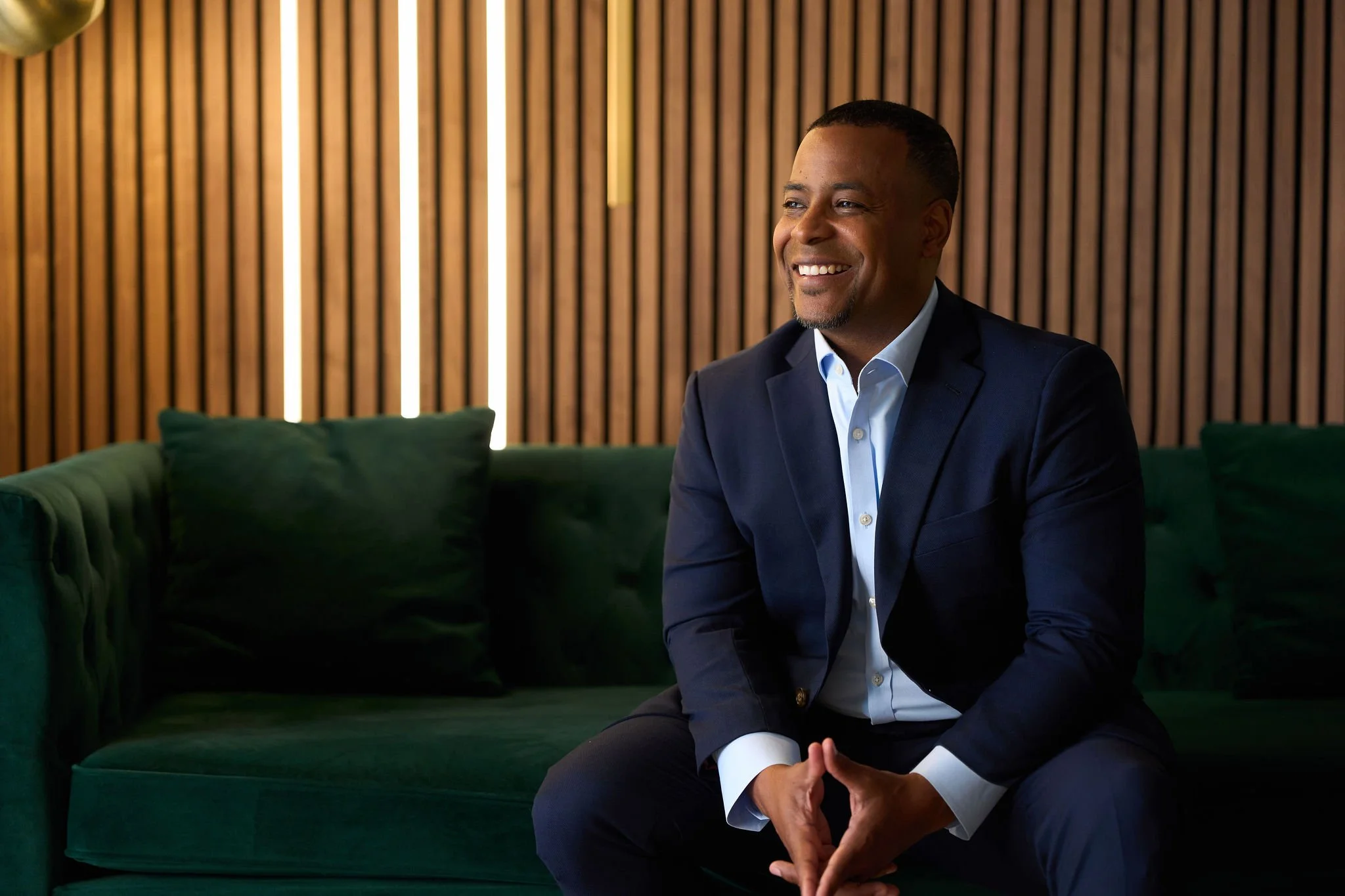
Germar is a strategist. A storyteller. An expert in the data science that governs the friction of business, geopolitics, and the global economy.
He applies the cold tools of analytics to decode the archetypes of power, not to impress, but to illuminate. His work draws from applied data science & analytics, making the most complicated topics relevant to the room. He believes that true influence begins not with charisma, but with character.
You can follow his work at GermarReed.com