
The CFO’s Guide to AI: Turning Modernization Costs into Revenue Streams

The CFO’s Guide to AI: Turning Modernization Costs into Revenue Streams
To win in the current data economy, the CFO must move from being the gatekeeper of spend to the Architect of Monetization.
In the quiet, climate-controlled corridors of the modern finance department, a new kind of anxiety has taken root. It is an anxiety measured in eight-figure line items and three-year depreciation cycles. For the Chief Financial Officer, Artificial Intelligence is often presented as a tidal wave—an inevitable force of nature that requires an immediate, massive, and seemingly bottomless commitment of capital. This perspective, viewing AI primarily as a "modernization tax," is what I call the Modernization Trap.
The Efficiency Illusion
The most common pitch for AI is the "Efficiency Play." On paper, saving 10,000 man-hours a month through automated summarization or chatbots looks like millions in savings. But in a large enterprise, those hours are rarely captured as cash; they are reabsorbed into the organizational vacuum. Unless you execute a corresponding reduction in headcount or a massive increase in output, that ROI is a ghost. The true ROI of AI isn't found in saving cents on the dollar in the back office; it is found in creating entirely new dollars at the front of the business.
Telemetry as the New Crude: The Refinery Model
When a CFO looks at a $50M modernization project to upgrade data infrastructure, they shouldn't see an IT expense; they should see the construction of a Refinery. The servers and models are the pipes and cracking towers. The telemetry—real-time pulses from vehicle sensors or customer interactions—is the raw crude. The failure of the "Cost Center" mindset is that it stops at the construction of the refinery. It builds the pipes but has no plan for what to sell at the end of the line.
Revenue Engineering and Digital Arbitrage
How does a CFO turn a cost into a revenue stream? It requires the discipline of Revenue Engineering—identifying where a "Sunk Cost" can become a "Digital Asset." At General Motors, we spend millions on vehicle diagnostics to reduce warranty costs. That is a defensive spend. But by layering AI over that telemetry, we create "Health Scores" for battery dealers and "Risk Profiles" for insurers. This is Digital Arbitrage: taking data already paid for by one part of the business and selling it for a high margin to another.
The Rise of the Bilingual CFO
AI is a living asset that requires constant feeding. Models decay, and "Alchemical Debt"—the hidden, compounding cost of keeping a model accurate—can overwhelm initial ROI. The "Bilingual CFO" is someone who can look at a neural network diagram and see a P&L. They understand that "Complexity is a Cost, but Clarity is a Profit." They don't just count the money; they architect the system that creates it.
Ultimately, the "Modernization Tax" is a myth. AI is only an expense if you fail to translate it. The bridge from Modernization to Monetization is the most important piece of architecture you will ever build. It is time to stop paying the tax and start collecting the dividends.
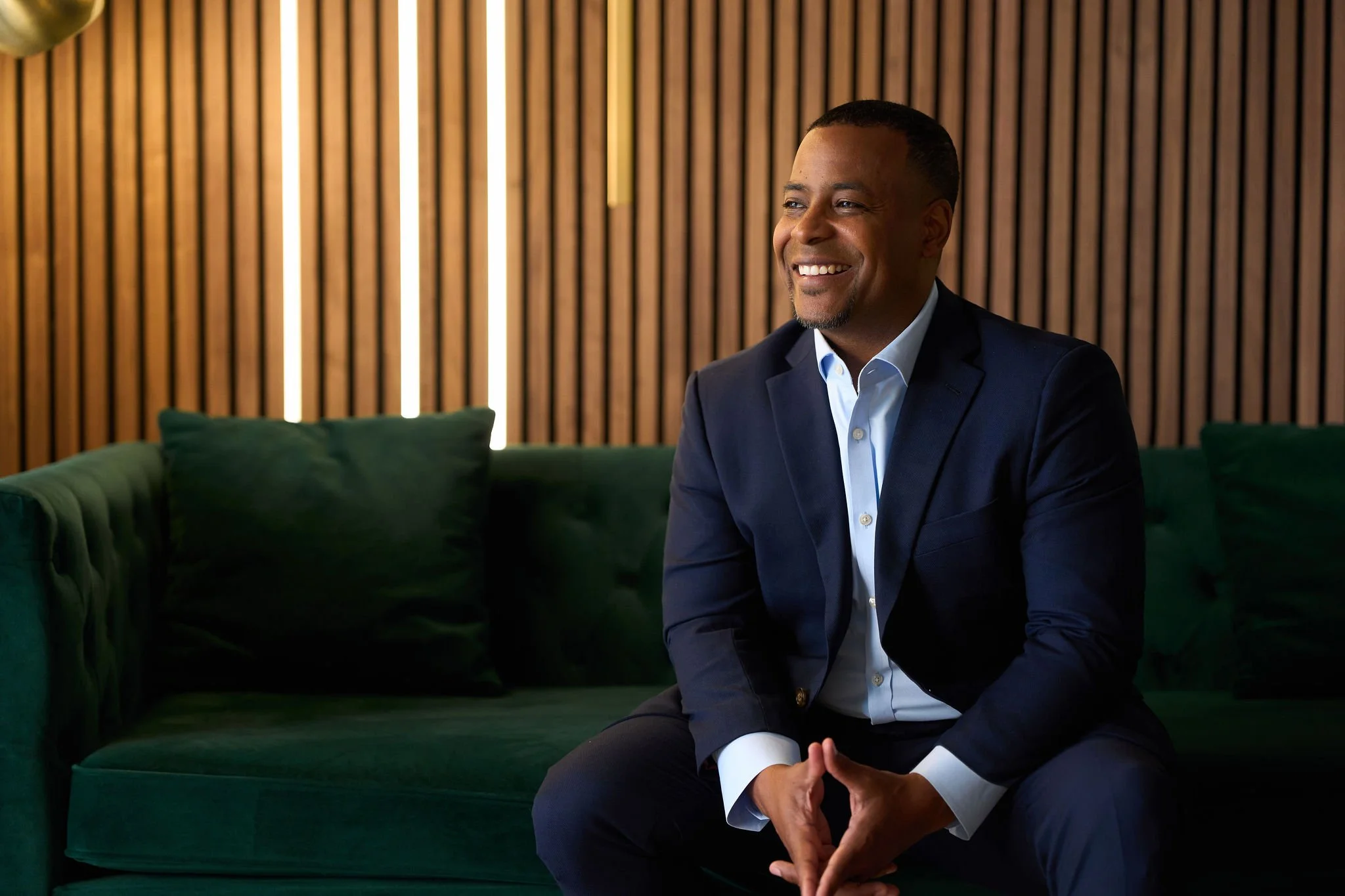
About the Author
Germar is a strategist. A storyteller. An expert in the data science that governs the friction of business, geopolitics, and the global economy.
He applies the cold tools of analytics to decode the archetypes of power, not to impress, but to illuminate. His work draws from applied data science & analytics, making the most complicated topics relevant to the room. He believes that true influence begins not with charisma, but with character.
You can follow his work at GermarReed.com