

Divided Command: How CDAO-CIO Friction is Quietly Killing the Enterprise AI Roadmap
The silent killer of modern AI velocity isn't a lack of computing power or dirty data—it is a structural turf war over who owns the brain of the enterprise.
In the high-stakes theater of modern enterprise technology, a quiet civil war is being waged over the possession of the machine. It is a conflict that doesn't make the front pages of tech blogs, but it is responsible for stalling billions in AI capital allocation. This is the structural friction between the Chief Information Officer (CIO) and the Chief Data & Analytics Officer (CDAO). While the CEO demands immediate generative breakthroughs, these two critical leaders are locked in a struggle that paralyzes execution, leaving the enterprise AI roadmap dead on arrival.
The Clash of Mandates: Stability vs. Entropy
To understand this friction, we must look at the structural incentives of both roles. The CIO is historically oriented toward Risk Mitigation and Cost Containment. Their performance is measured by system uptime, security compliance, SLA adherence, and budget efficiency. In their world, change is a variable that introduces risk; their mandate is to build a fortress that resists entropy. The CDAO, by contrast, is oriented toward Value Extraction and Digital Innovation. Their performance is measured by predictive accuracy, model velocity, and data monetization. To create new value, the CDAO must introduce entropy, testing models that push limits and pulling raw telemetry from systems the CIO has spent years securing.
The "Platform vs. Product" Deadlock
This misalignment manifests in a tactical stalemate. The CDAO’s data scientists build a highly predictive model in a local sandbox, only to watch it languish for nine months because the CIO’s infrastructure team refuses to deploy it into production. The CIO cites security protocols, API stability, and cloud budget thresholds; the CDAO complains of bureaucratic paralysis and "infrastructure gatekeeping." This is the Dashboard Delusion occurring at an organizational level—we have separated the people who build the roads from the people who design the vehicles, and we wonder why the traffic isn't moving.
- Redefine the SLA: Transition the CIO’s metrics from simple "System Uptime" to "AI Model Velocity."
- Productize the Data: Treat the CIO as the "Refinery Operator" (providing clean pipelines) and the CDAO as the "Retailer" (converting data into P&L margin).
- Incorporate Joint Guardrails: Build automated, code-based gates that allow the CDAO to deploy into production without bypassing the CIO’s security mandates.
Unified Leadership Over Technical Pedigree
In my experience directing data science and analytics at large organizations, we’ve found that the most successful digital products—initiatives that delivered hundreds of millions in cost efficiency and revenue expansion—required absolute alignment of infrastructure and insight. We did not treat analytics as an IT expense, nor did we treat infrastructure as a passive utility. The solution is not to hire more PhDs or purchase more LLMs; the solution is to hire "Bilingual Growth Architects" who can bridge the gap between cloud architecture and predictive modeling.
Ultimately, the CDAO-CIO divide is an executive design flaw. AI is not a software application to be managed by IT, nor is it a mathematics experiment to be isolated in an analytics lab. It is a living, operational nervous system. The companies that dominate the next decade will be those that dissolve these artificial silos, implementing a unified command structure that treats data infrastructure and cognitive insight as a single, high-margin engine of growth.
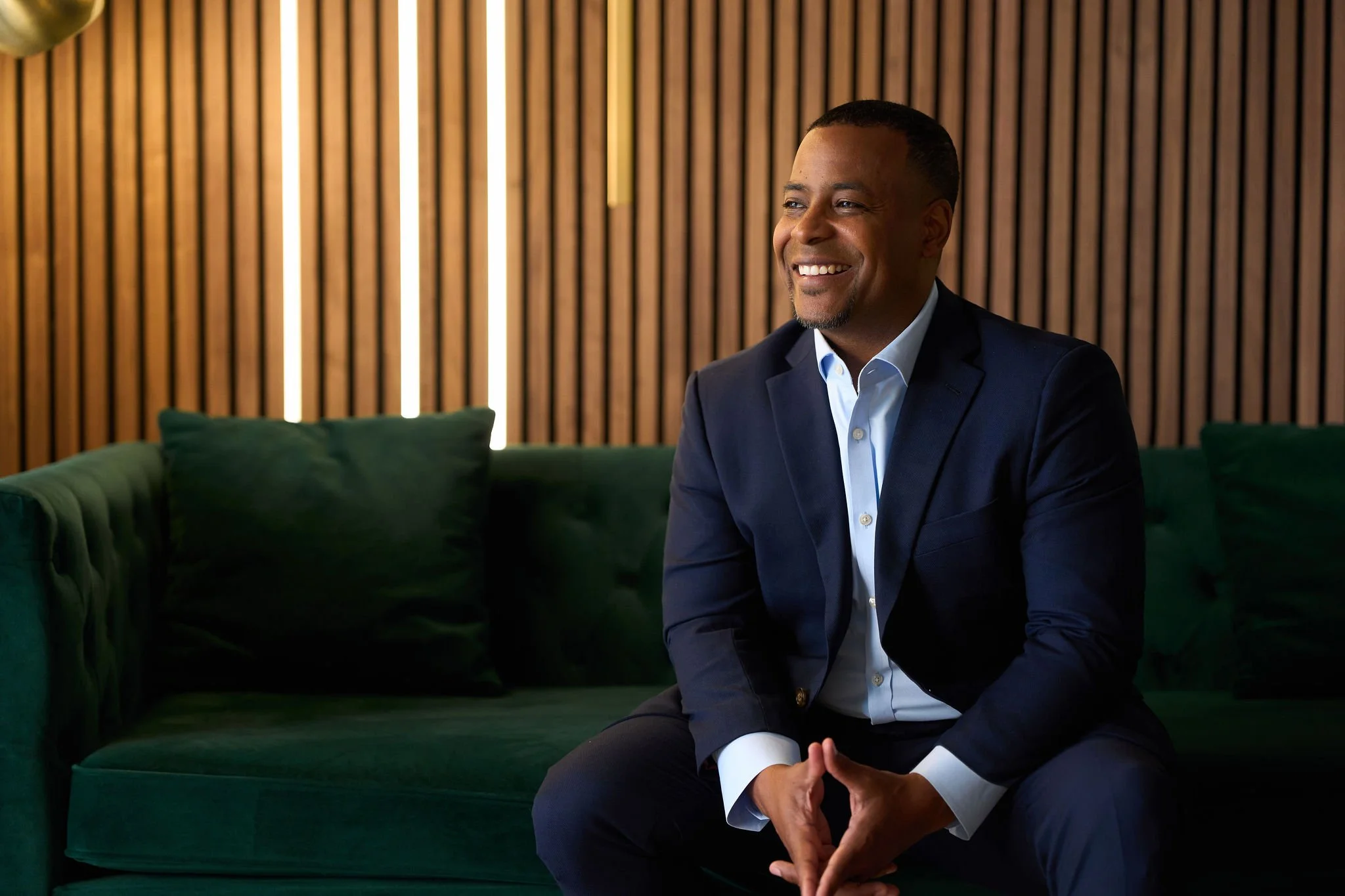
About the Author
Germar is a strategist. A storyteller. An expert in the data science that governs the friction of business, geopolitics, and the global economy.
He applies the cold tools of analytics to decode the archetypes of power, not to impress, but to illuminate. His work draws from applied data science & analytics, making the most complicated topics relevant to the room. He believes that true influence begins not with charisma, but with character.
You can follow his work at GermarReed.com